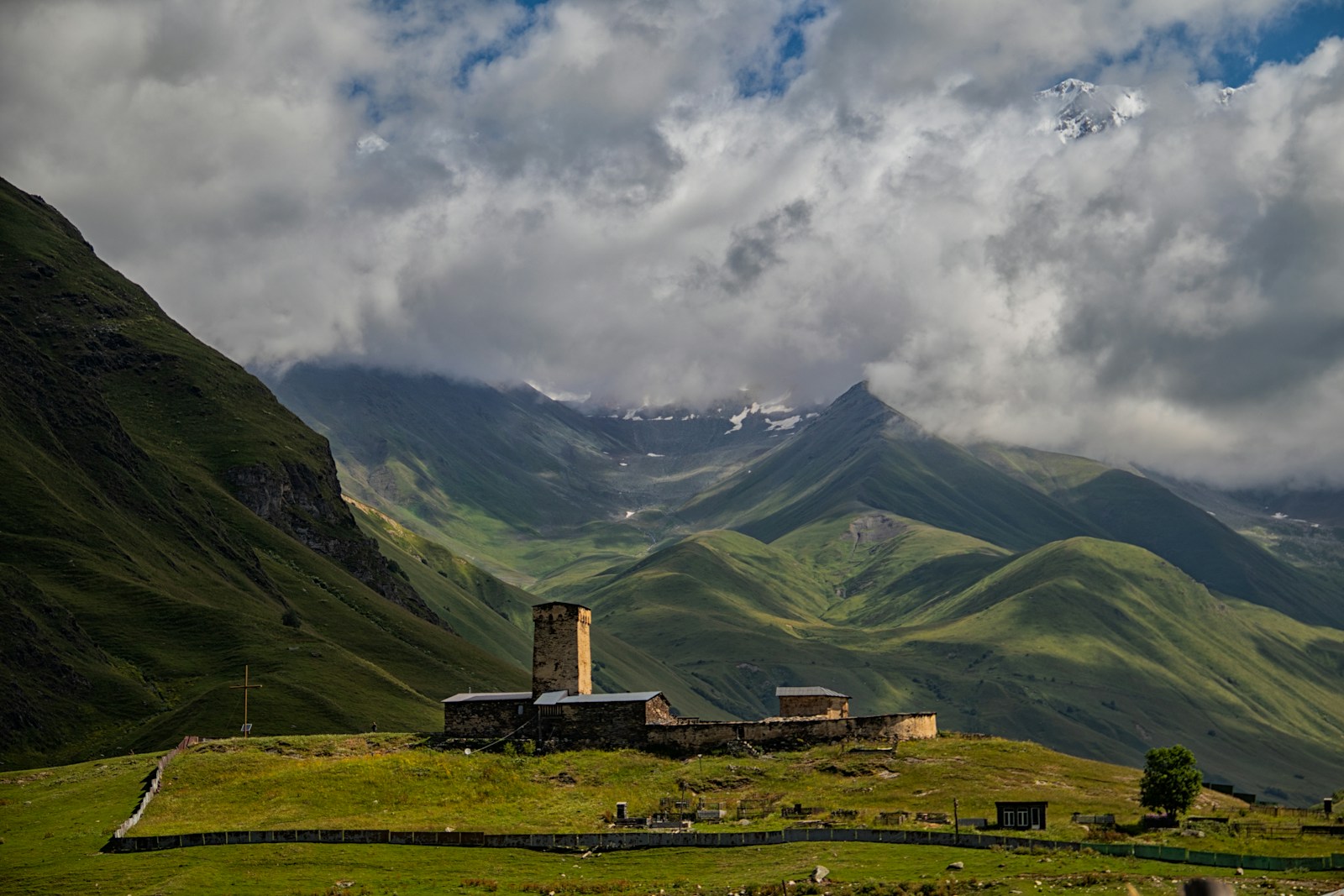
Explore Latin America and How the Continent Works
Latin America is not a unified travel system. It is a region defined by sharp contrasts in governance, infrastructure, geography, and economic capacity, layered across a shared colonial history and linguistic overlap. Superficial similarity masks deep structural variation. Travel here is shaped more by terrain, state capacity, and transport corridors than by cultural continuity.
Travel succeeds in Latin America when planned around regional systems and physical constraints, not assumptions of proximity or linguistic ease.
Why Latin America is not one travel system
Latin America does not operate under shared mobility, immigration, or transport frameworks. There is no continent-wide freedom of movement, no integrated rail network, and no standardized visitor experience. Borders remain meaningful operational barriers, even between neighboring countries with shared language and history.
South America, Central America, Mexico, and the Caribbean function as distinct travel systems with different access logic. Even within South America, travel conditions differ radically between the Andean spine, Amazon basin, Southern Cone, and Atlantic-facing economies. These differences do not soften gradually; they reset at borders and sometimes within countries.
Infrastructure quality, administrative enforcement, and transport reliability vary sharply. Capital cities and core tourist corridors often function smoothly, while secondary regions operate with limited redundancy. Planning assumptions must therefore be rebuilt country by country, and often region by region.
Geography as a controlling force
Latin America’s geography is not a backdrop; it is a governing constraint. The Andes create one of the world’s longest and most disruptive mountain barriers, fragmenting east–west movement and concentrating transport along narrow corridors. The Amazon basin limits overland continuity across much of northern South America. Deserts, jungles, and seismic zones further restrict infrastructure density.
As a result, distance in Latin America is topographical, not linear. Routes that appear short on a map may require long detours, altitude adjustments, or multiple transport modes. Overland travel often follows historical paths rather than direct lines, shaping both cost and time efficiency.
These constraints explain why aviation dominates long-distance movement even where geography suggests proximity.
Entry gateways and aviation structure
International access to Latin America is concentrated through a limited set of aviation hubs that act as regional funnels rather than continent-wide connectors. Cities such as Mexico City, Bogotá, Lima, São Paulo, Panama City, and Santiago anchor long-haul routes and redistribute traffic into sub-regional networks.
Outside these hubs, flight frequency drops sharply. Many routes rely on a single carrier or operate only a few times per week. Missed connections often cascade into overnight delays or forced rerouting through distant hubs. This structure reflects long-haul aviation economics and operational standards coordinated globally through the International Civil Aviation Organization.
At the network level, route density and corridor concentration across Latin America follow demand and fleet constraints documented by the International Air Transport Association.
Borders, visas, and administrative variability
Borders in Latin America remain high-impact planning variables. While some countries offer visa-free access for many nationalities, entry rules, length-of-stay limits, and documentation requirements vary and can change quickly. Enforcement consistency also differs widely between ports of entry.
Administrative friction is often uneven rather than uniformly strict. One border crossing may be procedural and efficient; another may involve delays, informal practices, or inconsistent interpretation of rules. This variability affects not only entry but onward movement, registration requirements, and domestic travel documentation.
Cross-border administrative complexity across Latin America is closely tied to broader trade, labor, and governance structures analyzed by institutions such as the World Bank, whose regional assessments help explain why integration remains partial despite geographic proximity.
Internal movement and infrastructure contrast
Latin America contains both highly modern transport corridors and regions where infrastructure remains sparse. Metro systems, modern airports, and tolled highways coexist with mountain roads, river transport, and seasonal access routes. Reliability is corridor-specific, not national.
Rail plays a limited role outside a few commuter and freight networks. Overland bus systems are often extensive but vary in quality and safety by country and operator. Road conditions can change rapidly with weather, altitude, or maintenance cycles.
Infrastructure investment patterns and corridor development across the region are shaped by long-term economic strategies and public–private financing models examined by institutions such as the Inter-American Development Bank.
Successful itineraries cluster movement within infrastructure-dense corridors rather than attempting rapid cross-system transitions.
Environmental exposure and access volatility
Latin America spans tropical rain belts, high-altitude plateaus, arid deserts, hurricane-prone coasts, and seismic zones. Weather and natural hazards affect access far more than comfort. Rainy seasons disrupt roads and domestic flights in parts of Central America, the Andes, and the Amazon. Hurricanes shape access windows in the Caribbean and Gulf-facing regions.
Earthquakes and volcanic activity add another layer of exposure along the Pacific Rim. Disruption is often localized but decisive, closing routes and isolating regions with little notice.
Climate monitoring and seasonal risk assessment that inform aviation, disaster preparedness, and infrastructure planning across the region are coordinated through bodies such as the World Meteorological Organization.
Latin America operates as a terrain-fragmented, corridor-driven region. Geography dictates movement. Aviation anchors long-distance travel. Borders reset rules. Infrastructure density determines reliability. Continuity exists within corridors, not across the continent.
Travel that works here is region-focused, terrain-aware, and system-conscious.
Environment, seasonality, and health in Latin America
Environment in Latin America is not a secondary variable. It is a primary operating system that determines access, timing, and physical feasibility. Climate cycles, altitude, disease exposure, and medical capacity interact continuously, reshaping itineraries in ways that cannot be solved through logistics alone.
Travel works here when environmental reality is treated as a structural constraint rather than a comfort consideration.
Rain cycles and seasonal disruption
Large parts of Latin America operate under pronounced wet–dry cycles rather than four temperate seasons. Rainfall patterns affect road conditions, river levels, landslide risk, and domestic aviation reliability. In Central America, southern Mexico, and much of the Andean region, heavy rains routinely degrade highways and isolate secondary regions. In the Amazon basin, water levels determine whether movement is possible at all.
Seasonality is uneven. The same month can produce peak conditions in one country and widespread disruption in another. Travelers crossing regions often move between incompatible seasonal windows without realizing it until access narrows.
These patterns are not anomalies. They are built into infrastructure planning, aviation scheduling, and disaster preparedness across the region.
Altitude as a physical threshold
Altitude introduces one of Latin America’s most underestimated constraints. Major cities, transit corridors, and cultural centers across the Andes operate well above elevations that affect oxygen availability, sleep quality, and physical performance.
Altitude illness is not limited to extreme trekking environments. Travelers arriving directly from sea level to high-altitude cities often experience fatigue, headaches, or impaired recovery that reduces daily capacity. Overland movement through mountain passes adds further strain, especially when combined with cold exposure or long travel days.
Altitude also affects evacuation timelines. Medical response and transfer options narrow significantly outside major Andean hubs, increasing the consequences of misjudged pacing.
Heat, humidity, and cumulative fatigue
In tropical and subtropical zones, heat and humidity impose physiological limits that shape how much movement is sustainable. High humidity reduces cooling efficiency, accelerates dehydration, and compounds fatigue over multi-day itineraries. Urban heat islands intensify these effects, particularly in low-lying coastal cities.
Travelers often miscalculate endurance. What feels manageable in isolation becomes destabilizing when layered with long bus rides, altitude shifts, or inconsistent sleep. Fatigue increases error rates, slows recovery, and amplifies the impact of delays.
Effective itineraries account for human limits, not just distance.
Disease exposure and preventive reality
Disease risk in Latin America is region-specific and seasonal. Vector-borne illnesses, waterborne disease, and food-related exposure vary sharply by geography and climate cycle. These risks influence entry requirements, vaccination policies, and health advisories that directly affect routing decisions.
Health guidance, vaccination standards, and disease surveillance that underpin national entry rules across the region are coordinated through global frameworks led by the World Health Organization. Travelers encounter these standards through vaccination requirements, health declarations, and shifting advisory guidance.
Preventive preparation is not optional. In many regions, it determines whether travel is feasible rather than merely advisable.
Medical infrastructure and isolation
Medical capacity across Latin America is highly uneven. Major metropolitan centers often offer advanced care, while rural regions, jungle zones, and island territories may have limited facilities capable only of stabilization. Serious medical events frequently require transfer to regional capitals or international evacuation.
Response time is often the limiting factor, not treatment quality. Weather, terrain, and infrastructure density affect evacuation feasibility and timelines. Outside core corridors, delays of days rather than hours are possible.
Health system capacity, emergency response coordination, and regional resilience planning across the Americas are shaped by continental public-health cooperation frameworks such as those coordinated by the Pan American Health Organization.
Travelers who plan successfully treat medical isolation as a baseline condition, not a contingency.
Natural hazards and access volatility
Latin America is one of the world’s most hazard-exposed travel regions. Earthquakes, volcanic activity, hurricanes, flooding, and landslides are structural realities, not rare events. Disruption is often localized but decisive, severing corridors and isolating regions without warning.
Infrastructure resilience varies widely. A functioning national system can fragment regionally within hours. Recovery timelines depend on terrain, governance capacity, and redundancy, which is often limited outside core economic zones.
Disaster-risk reduction frameworks that influence infrastructure planning and access management across the region are coordinated internationally through bodies such as the UN Office for Disaster Risk Reduction.
In Latin America, environment, seasonality, and health operate as a single layer. Rain alters roads and flights. Altitude affects endurance and response time. Heat compounds fatigue. Disease risk shapes entry and routing. Medical isolation raises stakes.
Trips succeed when itineraries are built to absorb environmental friction, not outrun it.
Cost, transport, and execution in Latin America
Execution in Latin America is shaped by structural unevenness. Costs, transport reliability, and time efficiency vary sharply between countries and often between corridors within the same country. A route that functions smoothly between major hubs can break down completely just one transition away, where flight frequency drops, roads degrade, or redundancy disappears.
Pricing reflects logistics rather than comfort. Remote or infrastructure-light regions often cost more due to limited transport options, fuel dependency, and thin supply chains. Currency volatility and inflation can shift costs mid-trip, making rigid budgets fragile. What appears inexpensive in planning can become expensive in execution once delays or rerouting occur.
Transport reliability is corridor-dependent. Core air routes absorb disruption; peripheral routes do not. Overland travel magnifies time cost through terrain, weather exposure, and administrative friction. Each transition compounds fatigue and reduces recovery margin, increasing the likelihood of cascade failure.
Travel succeeds when itineraries respect these asymmetries—staying within strong corridors, limiting transitions, and budgeting time and cost buffers—rather than averaging regional conditions into a single expectation.
Cost structures and price volatility
Costs across Latin America do not track neatly with income level or development rankings. They reflect fuel pricing, currency stability, demand concentration, import dependency, and infrastructure density. A destination that appears inexpensive on paper can become costly once limited transport options, schedule disruption, or security-driven routing are factored in.
Currency volatility is a defining variable. Exchange rates, inflation cycles, and price controls can shift quickly, altering accommodation rates and transport costs within the same season. Travelers who lock tight budgets without buffers often encounter cost overruns unrelated to comfort level or accommodation quality.
Macroeconomic conditions influencing inflation, currency exposure, and price stability across the region are monitored closely by institutions such as the International Monetary Fund, whose regional outlooks help explain why prices can change faster than traveler expectations.
Aviation dominance and corridor dependence
Aviation anchors long-distance movement across Latin America. Mountain barriers, jungles, and fragmented road networks make flights the most reliable way to move between regions, even when distances appear moderate. However, reliability depends heavily on corridor strength rather than geography.
Core routes between major hubs tend to be frequent and resilient. Outside those corridors, schedules thin rapidly. Many domestic and regional routes operate only a few times per week, with limited substitution when flights are canceled. Missed connections often cascade into forced overnight stays or rerouting through distant hubs.
Air travel in Latin America is therefore less about speed and more about predictability. Execution improves when itineraries remain within strong corridors and avoid chaining weak links back-to-back.
Overland travel and time cost
Overland travel remains central to many Latin American itineraries, but its efficiency is highly situational. Long-distance buses can be extensive and affordable, yet travel times are often far longer than maps suggest due to terrain, road quality, congestion, and checkpoints. Night buses reduce accommodation costs but add fatigue and reduce recovery.
Road reliability varies seasonally. Rain, landslides, and maintenance cycles can disrupt routes with little notice, particularly in mountainous and tropical regions. Border crossings add additional unpredictability, especially where administrative processes are inconsistent.
Overland travel works best when used within contained regions, not as a substitute for cross-system movement.
Rail’s limited role
Rail plays a minor role in most of Latin America’s travel execution because passenger networks are sparse, unevenly maintained, and poorly integrated across borders. Unlike regions where rail underpins intercity mobility, Latin American rail systems developed primarily for freight, extractive industries, or urban commuting rather than long-distance passenger travel.
Where passenger trains do operate, they typically serve short commuter corridors around major cities or function as heritage and scenic routes designed for experience rather than efficiency. Scheduling is infrequent, coverage is limited, and connections rarely align with broader regional itineraries. Cross-border rail travel is largely impractical due to incompatible infrastructure, administrative barriers, and lack of coordinated services.
As a result, rail rarely substitutes for air or road travel at the continental scale. It should be approached as a local or experiential add-on rather than a reliable backbone for itinerary design.
Infrastructure density and execution reliability
Infrastructure density is the strongest predictor of execution reliability. Capital cities and core economic corridors generally offer stable power, connectivity, and transport redundancy. Outside these zones, services thin quickly.
Regional corridor development and economic planning across Latin America and the Caribbean are tracked and analyzed by the UN Economic Commission for Latin America and the Caribbean (ECLAC).
Trips succeed when built around strong corridors, buffered transitions, and realistic time assumptions rather than ambition alone.
Mode consistency and transition risk
Transitions are the most common failure point in Latin America travel. Rapid switches between flights, long overland segments, and border crossings compound fatigue and increase exposure to disruption. Each transition resets timing assumptions, documentation requirements, and recovery needs.
Successful itineraries maintain mode consistency. Flight-heavy segments are grouped together. Overland exploration is localized. Border crossings are spaced rather than stacked. This sequencing reduces cascade risk when delays occur.
The cost of a transition is not just financial; it includes lost time, reduced resilience, and diminished decision quality.
Realistic time frameworks for Latin America (10–21 days)
Latin America rewards depth within defined corridors. Time frameworks that hold together emphasize regional focus rather than continental coverage.
10–12 days
One country or tightly connected sub-region
One dominant transport mode
Minimal border crossings
14–17 days
One primary country plus a contrasting secondary region
Clear separation between flight-based and overland segments
Built-in recovery days
18–21 days
Deep regional focus
Limited long-distance transitions
Explicit buffers for weather, borders, and transport disruption
These frameworks absorb friction without collapsing the trip.
In Latin America, cost, transport, and execution are inseparable. Currency volatility affects budgets. Aviation corridors define reliability. Overland travel shapes fatigue. Infrastructure density determines recovery options.
Trips succeed when built around strong corridors, buffered transitions, and realistic time assumptions rather than ambition alone.
Fit, failure points, and Latin America’s global role
Latin America rewards situational awareness more than ambition. The region’s terrain, institutional variability, and infrastructure gaps amplify the consequences of planning decisions. Well-aligned itineraries gain coherence once underway; weak assumptions unravel quickly and expose travelers to delays, cost escalation, and fatigue with limited recovery options.
Latin America occupies a critical position in global biodiversity, food systems, mineral supply chains, and climate regulation. These roles shape policy priorities that directly affect travel through conservation mandates, protected area management, and heritage preservation.
Cultural preservation frameworks that influence visitor management in sensitive areas are guided internationally through UNESCO.
Latin America is defined by terrain, corridors, and variability. Geography shapes movement. Aviation anchors distance. Environment governs access. Infrastructure density determines reliability. Continuity exists within regions, not across the continent.
Travel that succeeds here is deliberate, buffered, and region-aware. It prioritizes alignment over coverage and resilience over speed.
Latin America is not difficult. It is situational.
Who Latin America fits best
Latin America suits travelers who are comfortable navigating contrast and variability. It rewards those who can adapt pacing, expectations, and logistics across regions that differ sharply in infrastructure density, enforcement consistency, and environmental exposure.
It fits travelers who plan deliberately rather than reactively. Securing documentation early, sequencing routes around geography and seasonality, and choosing transport modes that match corridor strength are foundational rather than optional. The region also favors travelers willing to slow down—staying longer in fewer places to absorb altitude, climate, and cultural context without constant repositioning.
Those who value learning, observation, and lived experience over rapid coverage tend to extract far more meaning and stability from travel across Latin America.
Who Latin America does not suit
Latin America is less forgiving for travelers who rely on spontaneity across borders, rigid timelines, or assumptions of uniform service standards. Expectations of seamless transitions, predictable enforcement, or interchangeable routes often collide with regional reality.
It can also challenge travelers who equate efficiency with success. Attempts to compress countries, stack overland segments, or maintain constant movement increase fatigue and reduce resilience. When disruption occurs—as it often does—such itineraries collapse quickly because buffers are thin and alternatives limited.
Latin America does not resist travel. It resists compression.
Common failure patterns in Latin America travel
The most frequent failure is scope inflation. Travelers underestimate terrain, border friction, and recovery needs, attempting to cover too much geography in too little time. What appears manageable on a map fragments on the ground as each transition resets rules, transport logic, and pace.
Another common failure is environmental misalignment. Rain cycles, altitude effects, hurricane seasons, and seismic exposure are treated as secondary considerations rather than access-defining forces. When conditions shift, itineraries lack the flexibility to adapt.
A third failure point is assuming substitution. Missed flights, closed roads, or administrative delays are expected to resolve quickly, when in reality alternatives may be slower, more expensive, or nonexistent outside core corridors.
Trips fail not because Latin America is unpredictable, but because plans assume interchangeability where systems are rigid.
Latin America’s global role
Latin America occupies a critical position in global food systems, biodiversity preservation, mineral supply chains, and climate regulation. The Amazon basin alone plays a central role in carbon cycling and hydrological stability, while Andean water systems support agriculture and urban centers far beyond national borders.
These global roles shape policy priorities that directly affect travel. Conservation mandates, indigenous land protections, resource governance, and climate-resilience planning influence where access expands, where it is restricted, and how tourism is regulated. In many countries, tourism operates within broader development and environmental strategies rather than as a standalone sector.
Development frameworks and governance priorities influencing social inclusion, environmental protection, and infrastructure investment across the region are supported by institutions such as the United Nations Development Programme. Cultural preservation and heritage protection, which also affect access and visitor management in sensitive areas, are guided internationally through bodies such as UNESCO.
For travelers, this means access conditions are policy-responsive, not static. Regulations, protected areas, and infrastructure priorities can evolve faster than reputation or prior experience suggests.
Latin America is defined by terrain, corridors, and variability. Geography shapes movement. Aviation anchors distance. Environment governs access. Infrastructure density determines reliability. Continuity exists within regions, not across the continent.
Travel that succeeds here is deliberate, buffered, and region-aware. It prioritizes alignment over coverage and resilience over speed.
Latin America is not difficult. It is situational.
Where to Go in Latin America
Argentina | Belize | Bolivia | Brazil | Chile | Colombia | Costa Rica | Cuba | Dominican Republic | Ecuador | El Salvador | French Guiana | Guatemala | Honduras | Nicaragua | Panama | Peru | Uruguay