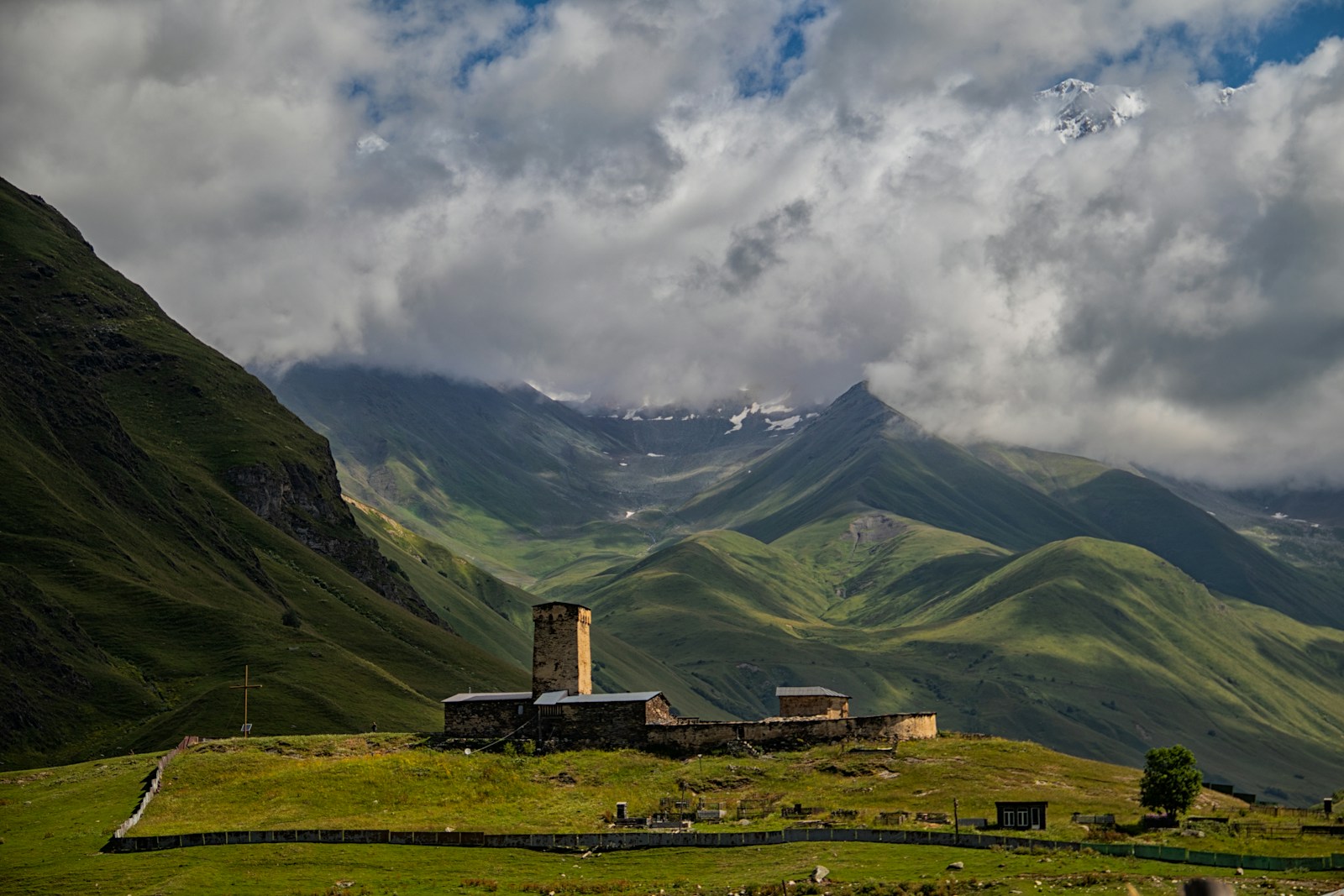
Explore Africa and How the Continent Works
Africa is not a single travel system. It is a continent of more than fifty sovereign countries, each with distinct visa rules, infrastructure capacity, currencies, health requirements, and border controls. Geographic proximity does not imply logistical continuity. A route that looks short on a map can still require multiple flights, overnight stops, or layered administrative steps that reshape an itinerary entirely.
Travelers who succeed in Africa plan around systems and constraints—how borders behave, how transport networks actually connect, and how climate and health realities set limits—rather than planning around distance alone.
Why Africa is not one travel system
Africa does not operate under shared mobility, immigration, or transport frameworks. There is no continent-wide freedom of movement for visitors, no unified rail grid, and no standardized cross-border travel experience. Regional cooperation exists, but it rarely translates into “seamless travel” in the way travelers assume when they picture multi-country loops.
Infrastructure density varies dramatically between and within countries. Some destinations run modern international airports and strong road corridors, while others rely on limited paved roads, thin domestic flight schedules, and inconsistent utilities. These disparities create hard breaks at borders, not gradual transitions.
Because core systems reset with each crossing—currency, connectivity, health rules, and transport logic—planning assumptions must be rebuilt country by country.
Africa’s entry gateways and aviation reality
International access to Africa concentrates through a limited set of aviation hubs that function as regional funnels rather than continent-wide connectors. Cities such as Addis Ababa, Johannesburg, Nairobi, Casablanca, Cairo, and Dakar matter because they determine onward routing options, schedule density, and how many connections you must absorb.
Even with hub gateways, intra-African connectivity remains uneven. Many routes require backtracking through hubs or adding overnight layovers despite short geographic distances. This pattern is reinforced by global civil aviation structures and facilitation standards coordinated through the International Civil Aviation Organization.
At the airline-network level, corridor density and scheduling realities align with how the industry is structured through carriers and route economics reflected by the International Air Transport Association.
Borders, visas, and mobility asymmetry
Borders in Africa function as real operational barriers, not formalities. Visa requirements, fees, processing timelines, and documentation standards vary widely and can change quickly. Some countries offer visa-free entry or e-visas; others require advance applications, invitation letters, proof of accommodation, or onward travel documentation.
Mobility asymmetry is common. Entry may be easy in one direction and harder in another depending on nationality, travel history, route sequencing, and how a country treats specific travel profiles.
Administrative friction affecting cross-border movement is consistently treated as a measurable constraint in regional integration frameworks such as the Africa Regional Integration Index, supported by institutions including the World Bank.
Why “pan-Africa trips” fail
Many first-time visitors attempt broad, multi-country Africa trips that mirror European loops—moving quickly across borders under the assumption that proximity implies continuity. Structurally, these plans fail. Africa does not offer dense, interoperable transport networks or harmonized border systems that allow fast, low-friction transitions. Each move introduces compounding friction: flight frequency drops sharply outside major aviation corridors, border processing absorbs unpredictable time, and costs escalate with every additional reset.
The friction is not linear; it is cumulative. A single border crossing may appear manageable, but multiple crossings amplify risk. Delays cascade when flights operate only a few times per week, when missed connections require overnight stays, or when administrative requirements differ subtly but decisively between neighboring countries. What looks like an efficient geographic progression on a map often becomes a fragmented sequence of waits, reroutes, and sunk time.
Every border introduces a new operating system. Currency changes affect pricing and payment access. SIM and data rules reset connectivity. Health requirements and documentation can shift without alignment. Transport reliability, safety standards, and service expectations change immediately. Travelers must repeatedly recalibrate how movement works, how services are accessed, and how risk is managed.
Unlike Europe—where integration is reinforced by shared mobility frameworks, interoperable rail systems, and coordinated border policy—Africa’s regional integration remains uneven and primarily political rather than operational. Analyses of cross-border movement and regional connectivity published by institutions such as the World Bank consistently highlight how administrative and infrastructure asymmetries slow movement even for trade and labor, let alone short-term visitors.
The result is not simply inconvenience, but itinerary erosion. Time budgets shrink, recovery days disappear, and decision-making becomes reactive rather than intentional. Travelers spend more effort managing logistics than engaging with place.
Internal movement and ground reality
Within countries, movement quality varies by corridor. Capital-to-capital routes are often reliable; secondary cities may require long road journeys, infrequent flights, or both. Rail networks exist in pockets but rarely integrate across borders or align cleanly with common visitor routes.
Road conditions can change quickly due to weather, maintenance cycles, or security context. Infrastructure and corridor development priorities are treated as core constraints in development financing and transport planning led by institutions such as the African Development Bank.
Aviation frequency and route concentration also explain why short hops still default to flights and why missed connections can cascade when schedules are thin—especially outside the strongest corridors.
Climate zones and seasonal access
Across Africa, climate is not a background variable—it determines when travel is possible and how movement functions. The continent spans equatorial rain belts, arid deserts, Mediterranean coasts, tropical savannas, and highland plateaus. These zones rarely align with borders, and seasonal patterns can invert within a single itinerary.
Rainy seasons affect far more than comfort. In East and Central Africa, heavy rains degrade roads, disrupt domestic flights, and restrict access to parks and rural regions. In the Sahel and Horn of Africa, drought cycles reshape service availability and transport reliability. Seasonal outlooks and climate monitoring published through the World Meteorological Organization are built around exactly these operational consequences.
Health preparation and medical reality
Health considerations in Africa are structural, not optional. Outside major cities and select hubs, medical facilities may be limited in scope and capacity. Preventive preparation—vaccinations, prophylaxis where appropriate, insurance, and evacuation coverage—often determines whether travel is feasible.
Disease risk varies sharply by region and season. Proof of vaccination, particularly yellow fever, can affect border crossings as much as personal health. Country risk lists and vaccination requirement guidance maintained by the World Health Organization are a primary reference point used internationally.
Infrastructure gaps and expectation mismatch
Africa’s infrastructure is uneven by design and history. Modern airports and highways may coexist with regions lacking paved roads, reliable power, or consistent water access. Mobile connectivity may be strong in cities and intermittent outside them.
Travelers encounter friction when they assume uniform service standards or continuous connectivity. Buffer time, redundancy, and local knowledge often matter more than speed. Infrastructure gaps and transport constraints are repeatedly highlighted as structural issues in continent-level development and financing work.
Planning implication: Build slack into itineraries and accept that progress is not linear.
Cultural frameworks and local norms
Culture across Africa is profoundly diverse. Languages, social hierarchies, religious practice, and daily rhythms vary not only by country but by region and community. Urban norms may differ sharply from rural expectations within short distances.
Respectful behavior—greeting customs, dress expectations, photography etiquette, and negotiation norms—shapes interaction quality. Cultural heritage frameworks supported by UNESCO underscore the depth and variety of heritage landscapes travelers move through.
Time, pace, and productivity assumptions
Time in Africa often operates on a different cadence than many travelers expect. Schedules may be fluid, services may prioritize relationships, negotiation, or situational judgment over speed, and delays can occur without explanation or apology. This is not disorder; it reflects systems that value adaptability and human context over rigid optimization.
Travelers accustomed to tightly sequenced days often underestimate how quickly variability accumulates. Traffic patterns shift without warning, departures may depend on demand thresholds rather than fixed timetables, and administrative steps can take longer than anticipated. When multiple small delays stack, rigid itineraries collapse—not because anything has gone wrong, but because the plan allowed no margin for how time actually functions.
Productivity assumptions also differ. A day that yields fewer physical stops can still deliver more meaningful engagement, whether through extended conversations, slower transit that reveals landscape and context, or unplanned adjustments that improve outcomes. Travelers who reduce daily objectives often experience less friction, lower fatigue, and greater situational awareness, even if fewer sites are visited.
The critical adjustment is psychological as much as logistical. Attempts to “push through” delays usually increase stress and reduce decision quality. Those who accept slower pacing tend to make better real-time choices and recover more easily when plans shift.
Africa’s cost realities by sub-region
Costs across Africa do not correlate cleanly with development rankings or income labels. They are driven primarily by logistics, remoteness, market size, and demand concentration. Remote or lightly trafficked regions cost more not because of luxury, but because supply chains are thin, transport options are limited, and redundancy is expensive to maintain. Safety margins—vehicles, fuel, staff, contingency planning—are built into pricing by necessity.
Safari circuits in East and Southern Africa illustrate this clearly. High fixed costs stem from conservation fees, regulated access to protected areas, long transfer distances, and the requirement for specialized vehicles and guides. Even mid-range experiences carry elevated baseline costs because access itself is resource-intensive. These prices are relatively stable year to year because they reflect structural constraints rather than seasonal discounting.
North Africa operates differently. Strong urban infrastructure, dense populations, and competitive accommodation markets allow for more moderate daily costs, particularly in cities. However, peak seasons and heritage-heavy destinations can still experience sharp price spikes tied to demand rather than logistics.
Parts of West and Central Africa often appear inexpensive on a daily basis—food, local transport, basic lodging—but introduce hidden cost pressure elsewhere. Limited flight options, infrequent schedules, permit requirements, private transport needs, or security-related logistics can quickly outweigh low on-the-ground expenses. What looks affordable in isolation becomes costly when movement and access are factored in.
Currency volatility adds another layer. Prices can shift within short timeframes, affecting accommodation and transport more than everyday expenses. Travelers who budget too tightly leave no margin for these fluctuations.
Macro conditions such as inflation and currency pressure shift faster than many travelers expect, which is why the International Monetary Fund is a standard reference point for economic volatility context.
Transport systems: air, road, and rail reality
Transport in Africa is hierarchical rather than networked. Air travel connects capitals and a limited number of regional hubs with reasonable efficiency; outside those corridors, frequency drops sharply and schedules thin out. This structure means that even short geographic distances can require indirect routing, overnight layovers, or multi-leg journeys that reshape time and cost assumptions.
Rail infrastructure exists in pockets but rarely functions as an integrated system. Lines are often legacy networks designed for freight or domestic movement, not cross-border passenger travel, and interoperability between countries is limited. As a result, rail rarely substitutes for air travel in continent-scale itineraries.
Road travel fills many gaps but introduces its own constraints. Reliability varies by corridor, season, and maintenance cycle. Weather can degrade road conditions quickly, border crossings add administrative friction, and security considerations can reroute or delay journeys without notice. What appears viable in dry season may become impractical during rains.
Airline corridor strength and schedule concentration reflected by the International Air Transport Association helps explain why missed connections can cascade and why “short distance” does not equal “easy transit.” When flights operate only a few times per week, a single delay can erase days rather than hours.
The practical effect is that time risk increases exponentially as travelers move away from core hubs. Flexibility shrinks, recovery options narrow, and contingency planning becomes essential rather than optional.
Safari, city, and overland travel logic
Trips fail when incompatible travel modes are mixed casually. Each mode in Africa operates under different constraints, pacing, and recovery requirements, and treating them as interchangeable creates friction that compounds quickly.
Safari travel is time-intensive and rigid by design. Early starts, long game drives, fixed access windows, and limited transport flexibility dominate daily structure. Once committed, schedules are difficult to compress or rearrange without losing value. Recovery time is built into the experience, whether travelers plan for it or not.
City travel operates on a different logic. Urban environments allow greater flexibility, shorter transit windows, and more adaptive pacing. Activities can be rearranged, days can be shortened or extended, and recovery is easier to manage. City days tolerate disruption far better than wilderness travel.
Overland travel magnifies friction further. Border crossings, road conditions, weather exposure, and cumulative fatigue introduce unpredictability that affects both timing and energy levels. Even when distances appear short, overland segments often consume entire days and reduce capacity for meaningful activity immediately before or after.
Problems arise when these modes are alternated rapidly—for example, moving from an early-start safari directly into a long overland transfer, followed by dense city sightseeing. Fatigue accumulates faster than itineraries account for, and decision quality degrades as recovery windows disappear.
Successful itineraries cluster similar modes together. Safari segments are grouped and buffered. City days are sequenced to absorb transit fatigue. Overland legs are treated as primary activities, not background movement.
Realistic Africa travel frameworks (10–21 days)
Africa rewards longer stays with fewer transitions. A realistic framework emphasizes depth within a defined corridor rather than continental coverage.
10–12 days
• One country or tightly connected region
• One dominant travel mode
• Minimal internal flights
14–17 days
• One primary country plus one adjacent contrast
• Clear mode separation (e.g., safari first, city later)
• Built-in recovery days
18–21 days
• Deep regional focus (e.g., Southern Africa loop or East Africa corridor)
• Limited border crossings
• Explicit buffers for transport and weather
These frameworks absorb delays without collapsing the trip.
Accommodation and base strategy
Frequent base changes amplify cost and fatigue in Africa. Transfers are time-consuming, luggage handling can be slow, and traffic or road conditions add unpredictability. Stable bases reduce exposure to these risks and improve daily efficiency.
Location matters more than category. Proximity to transit corridors, reliable power, and medical access often outweigh luxury features. Familiarity with a base improves meal planning, transport timing, and contingency response.
The planning implication is to use accommodation as an anchor, not a nightly variable.
Guides, operators, and structured access
In many African contexts, guides and operators are enablers, not conveniences. They unlock access to protected areas, manage permits, interpret wildlife and history, and navigate administrative friction. This is especially true in safari regions and remote corridors.
In urban centers with strong infrastructure, independent exploration can work well. The key is discernment—knowing when structure adds value and when it restricts flexibility. Best-practice standards for responsible operations are outlined by bodies such as the Global Sustainable Tourism Council.
The planning implication is to deploy structure where it materially changes outcomes, not by default.
Cost, transport, and execution in Africa are inseparable. Remoteness drives price, aviation drives connectivity, and mode-mixing drives failure when done casually. Trips succeed when they prioritize stable bases, mode consistency, and realistic time budgets.
Africa planning pitfalls
The most common failure in Africa travel is scope inflation—trying to cover too many countries, regions, or travel modes in too little time. Maps compress distance; reality expands it. Each border introduces new visas, currencies, health rules, SIM access, and transport constraints. These resets compound fatigue and consume time budgets faster than itineraries anticipate, often turning well-intentioned plans into logistical exercises rather than meaningful travel.
Another frequent pitfall is seasonal blindness. Travelers plan around calendar availability rather than rainfall cycles, heat extremes, or road conditions. In many regions, a single rainy month can make routes unreliable, parks inaccessible, or domestic flights irregular. Conversely, peak dry seasons concentrate demand, reduce availability, and drive costs sharply upward. Seasonal variability is not marginal—it is decisive.
Underestimating health and contingency needs is equally common. Evacuation timelines, medical access, and insurance coverage matter more than accommodation quality or itinerary ambition. Trips unravel when health preparation is treated as paperwork rather than a feasibility gate, particularly outside major urban centers where response capacity is limited.
The planning implication is to design for constraint, buffers, and seasonality, not best-case assumptions.
Who Africa fits best
Africa suits travelers who value depth, patience, and systems thinking over speed and volume. It rewards those comfortable with variability, willing to adapt plans as conditions change, and interested in understanding context—history, ecology, governance, and contemporary realities—rather than collecting destinations.
It fits travelers who plan deliberately. Securing visas early, sequencing routes around seasonal access, and accepting that progress may be slower than in more integrated regions are not inconveniences here; they are part of how travel works. Travelers who prefer longer stays, fewer transitions, and immersion within a single country or tightly connected corridor tend to extract far more value and coherence from the experience.
Africa also suits travelers who are psychologically flexible. Adjustments are normal. Plans evolve in response to weather, infrastructure, or administrative realities. Those who can recalibrate expectations without frustration consistently report better outcomes.
Who Africa does not suit
Africa is less forgiving for travelers who rely on spontaneity, tight schedules, or uniform infrastructure. Those expecting European-style rail continuity, standardized service delivery, or frictionless border crossings often encounter friction rather than freedom.
It can also challenge travelers unwilling to adjust pacing, expectations of time, or comfort thresholds. Resistance to adaptation—rather than conditions themselves—is what most often undermines trips. Attempts to force rigid timelines or replicate travel styles from highly integrated regions typically lead to fatigue, missed connections, and reduced engagement.
This does not reflect a lack of sophistication in African travel systems; it reflects a mismatch between traveler expectations and operational reality.
Africa’s global role
Africa plays a central role in global biodiversity, mineral supply chains, climate resilience, and demographic growth. These forces directly shape tourism policy, conservation frameworks, and access decisions. In many countries, tourism revenue underwrites conservation efforts and community livelihoods; in others, access is deliberately constrained by environmental protection mandates, infrastructure limits, or security considerations.
Policy direction varies widely by country and can shift quickly in response to elections, economic shocks, or climate stress. Continental coordination and policy signaling led by the African Union, alongside multilateral development and environmental partners, influence how borders function, how protected areas are managed, and how visitor access is regulated.
For travelers, this means that access conditions are not static. Regulations, permits, and entry rules can evolve faster than guidebooks or past experience suggest.
Explore Africa by sub-region
Africa functions best when understood through sub-regional systems, not country lists.
North Africa
Mediterranean access, strong urban continuity, layered history, and seasonal heat. Planning hinges on climate windows and urban mobility.
West Africa
Dense cultures, complex borders, variable infrastructure, and strong regional identities. Administrative friction and flight planning dominate outcomes.
Central Africa
Low tourism density, limited connectivity, and high logistical complexity. Access often requires structured operations and extended buffers.
East Africa
Defined safari corridors, strong aviation links, and pronounced seasonality. Route sequencing and rainfall timing are decisive.
Southern Africa
Relatively integrated transport networks, cross-border circuits that can work with planning, and high fixed costs tied to conservation access.
Each sub-region demands different expectations around timing, cost, and mobility.
Africa does not reward casual planning. It rewards precision, patience, and respect for systems. Borders matter. Seasons dictate access. Health and transport define feasibility. When these realities are acknowledged from the start, travel becomes coherent and deeply rewarding. When they are ignored, friction accumulates quickly.
Africa is not difficult—it is variable.
Where to Go in Africa
Botswana | Cabo Verde | Côte d’Ivoire | Egypt | Ethiopia | Gambia | Ghana | Kenya | Madagascar | Malawi | Mauritius| Morocco | Mozambique | Namibia | Nigeria | Rwanda | Sao Tome and Principe | Senegal | Seychelles | South Africa | Tanzania | Tunisia | Uganda | Zambia | Zimbabwe