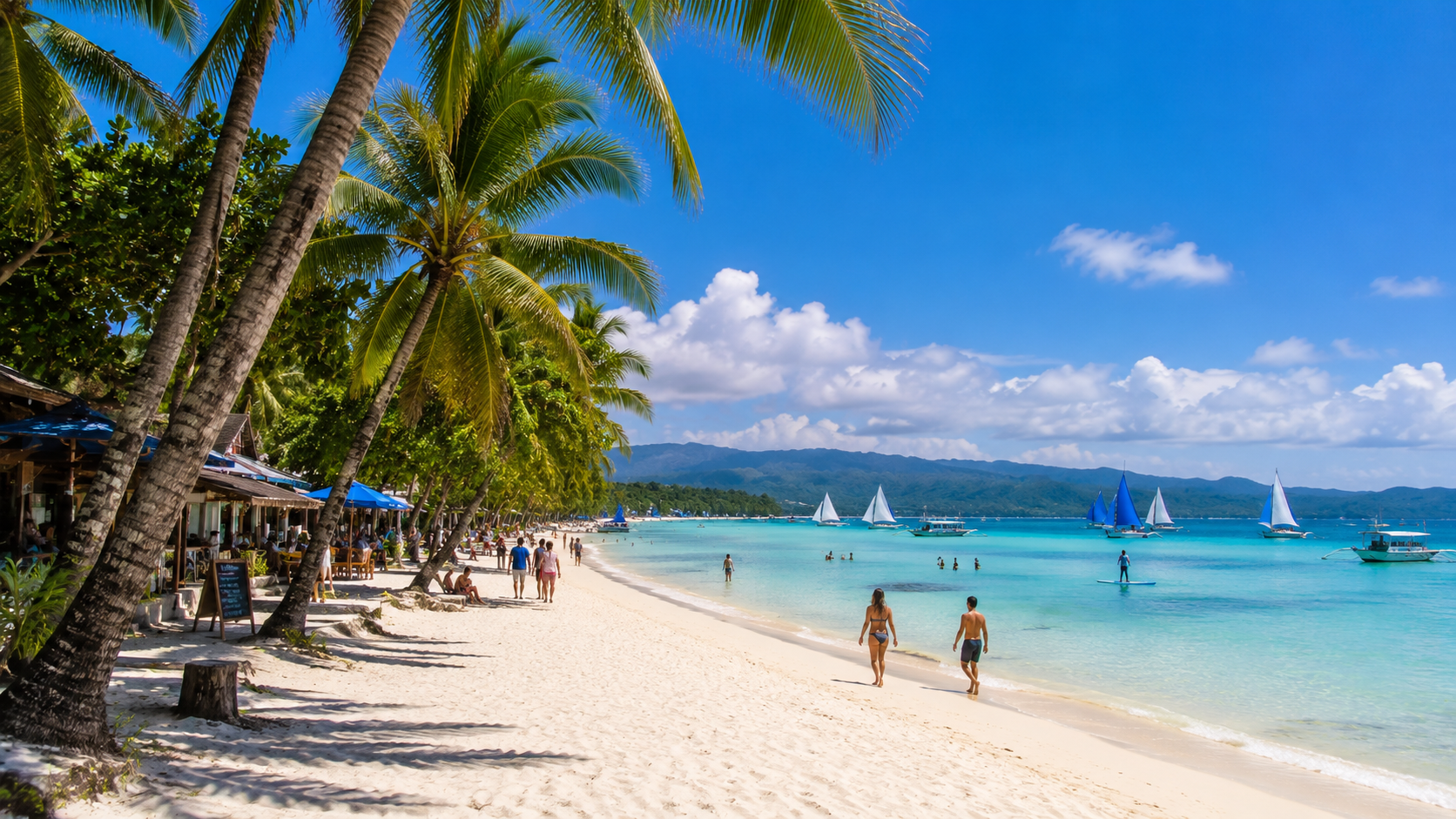
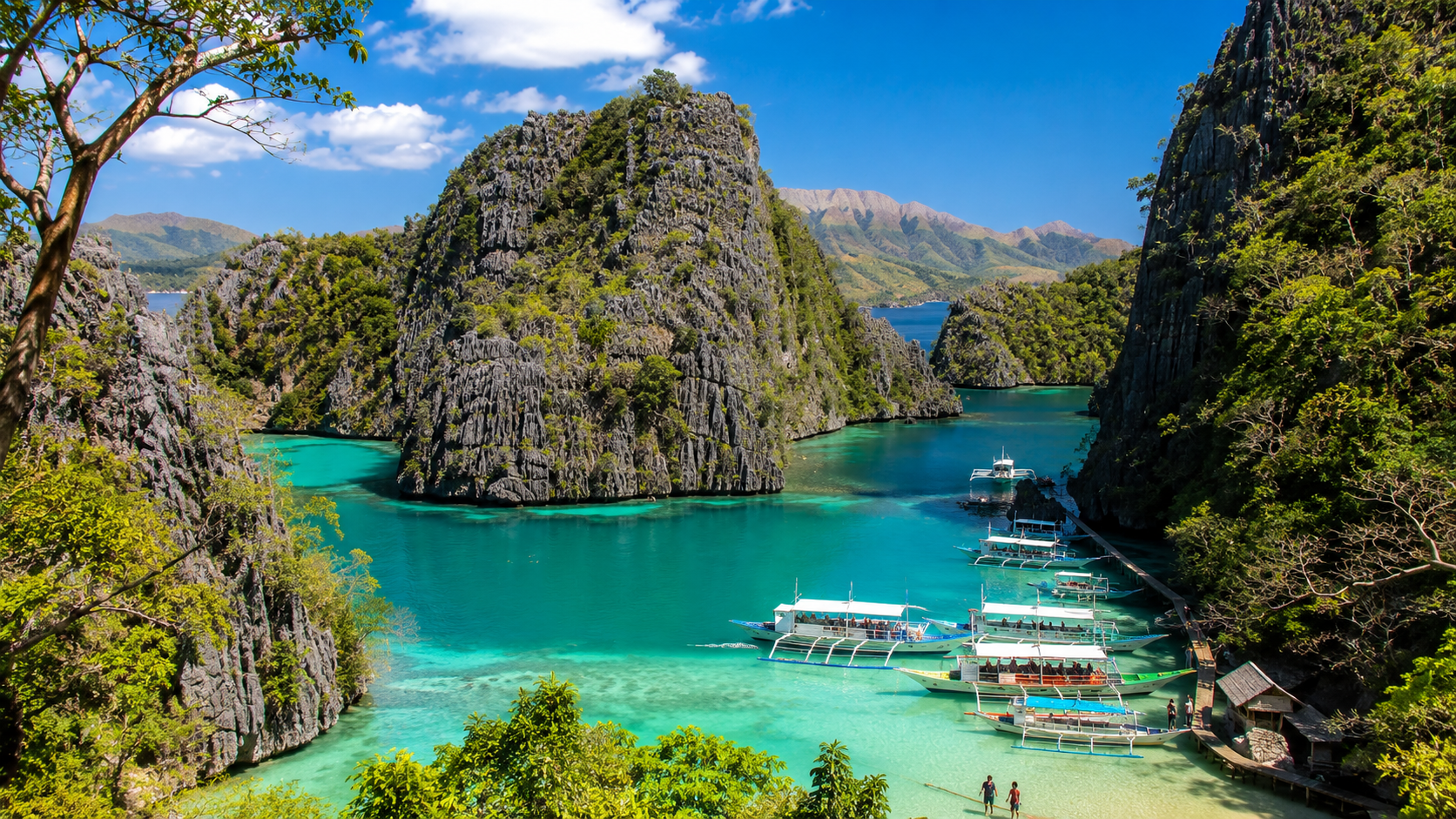
Lakshadweep is India at its most ocean-defined: a remote union territory of coral atolls, narrow inhabited islands, turquoise lagoons, reef systems, coconut groves, and communities scattered hundreds of kilometers off Kerala’s coast. Less a single destination and more a collection of island experiences, Lakshadweep rewards travelers who decide carefully which islands they actually want to reach rather than trying to treat the archipelago as one continuous beach resort. Its tiny land area is misleading because the sea separating the islands creates the distances and transportation constraints that matter most to a visitor. What works in Agatti does not work in Minicoy: Agatti functions as the principal air gateway, while far-southern Minicoy is a separate journey with its own cultural identity and considerable transport commitment. Permits, limited accommodation, weather-dependent boats, and controlled visitor access mean spontaneous island-hopping is far less practical here than in many tropical destinations. The strongest first trip therefore begins not with a list of beaches, but with a realistic choice of islands, transport connections, and enough time for the sea to dictate the pace.
Travel Essentials
Essential information for planning a trip to Lakshadweep, from entry permits and island transfers to local customs, emergency information and tropical weather.
Lakshadweep Quick Facts
Essential details worth knowing before you travel.
Lakshadweep is India’s smallest Union Territory, an Arabian Sea archipelago known for coral reefs, shallow lagoons, white-sand beaches and small island communities. Travel requires more advance planning than a typical mainland destination because entry is permit-controlled and movement between islands depends heavily on flights, vessels and sea conditions.
Arrival Information
Important entry, permit and arrival considerations.
An entry permit is required to visit Lakshadweep. The islands have controlled entry, including for Indian tourists. Foreign visitors face additional restrictions on which islands they may visit. Confirm current permit and visa requirements before booking your trip.
Entry Permit
Visitors must obtain authorization from the Lakshadweep Administration. Do not assume a flight or accommodation reservation alone gives permission to enter the islands.
Main Gateway
Kochi in Kerala is the primary mainland gateway for tourist travel to Lakshadweep by air and passenger vessel.
Foreign Visitors
Foreign nationals must meet Indian immigration and visa requirements as well as Lakshadweep’s permit rules. Island access can be more restricted than for Indian nationals.
Documents
Keep your passport or accepted identification, entry permit, accommodation details and transport confirmations accessible throughout the journey.
Health Information
Practical health considerations while visiting remote tropical islands.
Healthcare
Medical facilities are more limited than in major mainland Indian cities. Serious conditions may require evacuation or treatment on the mainland.
Vaccinations
Stay current on routine vaccinations and review India-specific health recommendations appropriate to your itinerary and personal circumstances.
Travel Insurance
Consider insurance covering medical treatment, evacuation, cancellations and disruptions caused by weather or transport.
Heat & Sun
Tropical heat, humidity and strong sun exposure make hydration, sun protection and breaks from prolonged outdoor activity important.
Travel Advisory
Safety, sea conditions and practical considerations for island travel.
Conditions and transport schedules can change. Check current official travel advice, permit requirements and local weather information before departure.
Sea Conditions
Rough seas and monsoon weather can affect passenger vessels, boats, excursions and transfers between islands.
Monsoon Disruption
The southwest monsoon can bring heavy rain, stronger winds and rougher seas, making some marine travel and tourism activities difficult or unavailable.
Water Activities
Use reputable operators for diving, snorkeling and boating, follow local safety instructions and respect changing sea conditions.
Remote-Island Planning
Transport, accommodation and services are more limited than on the mainland. Build flexibility into connections and avoid overly tight onward schedules.
Holidays & Busy Periods
Periods that may affect local services, travel and accommodation.
Visitor Information
Everyday details that make traveling in Lakshadweep easier.
Payments
Carry some Indian rupees because payment options and ATM access can be more limited on smaller islands than in mainland cities.
Tipping
Tipping is generally discretionary. Small tips may be appreciated for good service where appropriate.
Advance Planning
Arrange permits, accommodation and inter-island transport ahead of travel rather than relying on spontaneous arrival.
Island Environment
Coral reefs and lagoons are environmentally sensitive. Follow local conservation rules and avoid damaging or removing marine life and coral.
Air Gateways
The key airports used when traveling to the islands.
Agatti Airport
Lakshadweep’s principal airport and the main air gateway for visitors, with onward island transfers by boat or other authorized transport.
Cochin International Airport
The main mainland air gateway in Kerala for travelers connecting onward to Lakshadweep.
Transport in Lakshadweep
Ways to reach and move between the islands.
Flights
Agatti is the main air gateway, with Kochi serving as the principal mainland connection.
Passenger Ships
Passenger vessels connect Kochi with several Lakshadweep islands, with schedules subject to operational and sea conditions.
Inter-Island Boats
Boats and vessels are important for transfers between islands, resorts and visitor destinations.
Helicopter
Helicopter services support selected inter-island connections and essential transport, subject to availability and operations.
Local Transport
Islands are small, so local journeys are generally short. Available transport varies significantly by island.
Tour Transfers
Organized tourism packages may include scheduled ship, boat and island transfers as part of the itinerary.
Connectivity & Electricity
Internet access, mobile service and device compatibility.
Wi-Fi
Internet availability varies by island and accommodation. Do not assume mainland-style speeds or uninterrupted service.
Mobile Service
Mobile coverage is available in inhabited areas but reliability and network performance can vary by island and location.
Electricity
India uses approximately 230V electricity. Travelers should check whether their devices support the local voltage.
Outlets & Frequency
Electricity operates at 50Hz and Indian Type C, D and M plug configurations may be encountered.
Laws & Etiquette
Important rules and cultural considerations for island visitors.
Permit Restrictions
Visit only islands and areas authorized by your permit and follow conditions attached to your approved itinerary.
Local Culture
Lakshadweep has predominantly Muslim island communities. Dress and behave respectfully, particularly in villages and around religious sites.
Marine Environment
Follow environmental rules around coral reefs, lagoons, beaches and protected marine areas. Do not remove coral or disturb wildlife.
Alcohol Rules
Alcohol availability and restrictions differ from mainland tourist destinations. Follow current island-specific rules rather than assuming alcohol is generally available.
Religious Sites
Dress modestly, respect worshippers and follow local guidance before entering or photographing religious sites.
Photography
Ask permission before photographing residents and observe restrictions around sensitive, administrative or protected areas.
Emergency Information
Numbers and assistance worth keeping accessible.
Local Assistance
Keep your accommodation, tour operator and local administration contact information available because emergency logistics can differ between islands.
Lost Passport
Foreign visitors should report a lost passport to local police and contact their embassy or consulate for replacement-document guidance.
Lakshadweep Weather by Season
Tropical conditions are strongly influenced by the southwest monsoon.
Dry Season
October – FebruaryGenerally favorable conditions for island stays, beaches, snorkeling, diving and other marine activities.
Hot Season
March – MayTemperatures and humidity rise before the main monsoon period, with hot tropical conditions across the islands.
Southwest Monsoon
June – SeptemberRain, stronger winds and rough seas can significantly affect boats, marine activities and tourism operations.
Transition Period
September – OctoberConditions begin shifting away from the main monsoon, but travelers should continue checking current sea and weather conditions.
Lakshadweep’s Geography Shapes Every Trip
Lakshadweep is a union territory of India rather than a state, but for travel planning it functions as a distinct first-order destination with multiple inhabited islands and island groups. The administration describes an archipelago of 12 atolls, three reefs, five submerged banks, and ten inhabited islands spread across the Arabian Sea, roughly 220–440 kilometers from the Kerala coast. The official overview of the islands is available through lakshadweep.gov.in/islands.
The northern and central islands
Agatti, Bangaram, Kadmat, Kavaratti, Kalpeni, Amini, Kiltan, Chetlat, Bitra, and Andrott occupy the main northern and central part of the archipelago. For visitors, however, these names are not interchangeable. Some have established tourism facilities and water-sports infrastructure, while others are primarily local communities rather than conventional leisure destinations.
Agatti matters disproportionately because it contains Lakshadweep’s airport. Nearby Bangaram provides a more resort-oriented island experience, while Kavaratti combines lagoon recreation with its role as the administrative capital. Kadmat is particularly associated with diving and water activities.
Minicoy stands apart
Minicoy lies roughly 200 kilometers south of the main island group, making it a poor candidate for a casual add-on to a short Agatti trip. Its geographic separation is matched by cultural differences: Mahl is traditionally spoken there, and the island has distinctive village organization, maritime traditions, tuna fishing, and the historic lighthouse.
Treat Minicoy as a major component of a longer itinerary rather than another beach to squeeze between northern islands.
Kochi is the mainland gateway
Kochi in Kerala is the key mainland staging point for Lakshadweep. Official tourism information identifies Kochi as the normal access point, and sea journeys and air connections should be planned around that reality.
That makes a night in Kochi before the island portion of a trip sensible when connections are tight. A missed mainland connection is inconvenient almost anywhere; in Lakshadweep it can disrupt an itinerary built around limited transport.
Who Lakshadweep Suits Best
Lakshadweep works exceptionally well for travelers who consider the ocean itself part of the destination. It is much less suitable for travelers expecting a dense circuit of monuments, nightlife districts, shopping streets, and attractions accessible whenever they choose.
Beach and lagoon travelers
The strongest reason to come is the combination of coral islands and shallow lagoons. Travelers who can happily spend several days snorkeling, kayaking, swimming, diving, walking beaches, and slowing down will get far more from Lakshadweep than visitors attempting to fill every hour with sightseeing.
Divers and snorkelers
Kadmat, Kavaratti, and Bangaram are particularly relevant to underwater-focused trips. Official tourism information lists scuba facilities and a wider selection of lagoon activities, including kayaking, sailing, snorkeling, and glass-bottom boat experiences.
The Lakshadweep Administration provides additional information on water sports and diving through Tourism.
Couples and slow travelers
The combination of small islands, limited road traffic, beaches, lagoons, and resort stays makes Lakshadweep particularly compatible with honeymoons and quiet couple trips. It also suits travelers deliberately trying to escape a rapid sightseeing schedule.
Who may prefer somewhere else
Travelers wanting effortless independent island-hopping should recognize the restrictions before booking. Entry permits, controlled tourism access, limited accommodations, boat schedules, and weather all reduce flexibility.
Likewise, anyone primarily seeking nightlife, large luxury-shopping districts, or extensive restaurant choice will find other Indian coastal destinations easier.
Essential Lakshadweep First-Timer Basics
Lakshadweep requires more pre-trip organization than a normal domestic beach holiday.
Entry permits are mandatory
Entry is restricted, and visitors require authorization from the Lakshadweep Administration. The government maintains permit information and directs applicants toward its permit system.
Before buying nonrefundable components, review the current requirements through the official Lakshadweep entry-permit information.
Do not assume that because Lakshadweep is part of India, an Indian traveler can simply arrive as they would in Goa or Kerala. International visitors should also verify which islands they are currently permitted to visit and ensure their Indian immigration status satisfies the applicable requirements.
Choose islands before transport
This sequence matters. Decide first whether the trip is primarily Agatti and Bangaram, a diving-oriented Kadmat stay, a Kavaratti-centered experience, or a longer route involving Minicoy.
Only then should you build flights, ships, boats, and accommodation around those islands.
Build in transport tolerance
An island itinerary that depends on several perfectly timed transfers is fragile. Weather and sea conditions matter, and some connections are inherently more limited than mainland transportation.
Keep the final night before an important international flight on the mainland when practical, particularly if the itinerary includes multiple sea transfers.
Connectivity is not the reason to come
Travelers dependent on continuous high-speed connectivity should verify current service with their accommodation rather than assuming mainland-level coverage. Download essential documents, confirmations, permits, identification copies, and important contact details before leaving Kochi.
Major Islands and Destinations
Lakshadweep does not have major cities in the conventional sense. Its travel anchors are islands.
Agatti
Agatti is the logistical center of most air-based visits because it contains the airport. It is not merely a transit strip: its lagoon, coral life, beaches, and water activities can justify staying rather than immediately transferring elsewhere.
Official information places Agatti about 459 kilometers from Kochi and describes its lagoon as approximately 17.5 square kilometers.
For first-time travelers with limited time, Agatti is one of the simplest islands around which to build a trip.
Bangaram
Bangaram is close enough to Agatti to form one of Lakshadweep’s most natural combinations. Its appeal is uncomplicated: lagoon, reef, beach, water activities, and relative isolation.
The key planning advantage is geographic. Choosing Bangaram after arriving through Agatti avoids trying to connect distant parts of the archipelago merely to collect additional island names.
Kavaratti
Kavaratti is Lakshadweep’s administrative headquarters and offers a somewhat different experience from a purely resort-oriented island. Its lagoon supports swimming, snorkeling, kayaking and other water activities, while the island also offers glimpses into everyday Lakshadweep life.
Official destination information notes the island’s mosques, marine attractions, lagoon activities, and diving facilities. Travelers considering Kavaratti can consult Karavatti tourist place for current government information.
Kadmat
Long and narrow Kadmat is one of the strongest choices for travelers prioritizing water sports and diving. Government tourism information describes an island approximately eight kilometers long and only about 550 meters wide at its broadest point.
Choose Kadmat because you want an island-centered marine holiday, not simply because it adds another stop.
Minicoy
Minicoy deserves special attention because it provides both natural beauty and a cultural experience distinct from the northern islands. Its Mahl language, traditional villages, tuna-fishing heritage, Jahadhoni racing boats, Lava dance tradition, and historic lighthouse give it a stronger cultural identity than visitors expecting only beaches may realize.
The disadvantage is distance. Include Minicoy when you have enough time to make southern Lakshadweep a meaningful part of the trip.
Kalpeni
Kalpeni offers another lagoon-centered experience and can feature on itineraries linked to organized tourism arrangements. It makes more sense when it fits an established route with Kavaratti and Minicoy than when travelers attempt to force it into a short air-based Agatti holiday.
Lakshadweep’s Natural Highlights
Nature is not a side attraction here. It is the destination’s organizing principle.
Coral lagoons
Lakshadweep’s shallow lagoons create much of its visual identity. Reefs shelter luminous water between the ocean and narrow islands, producing environments suitable for swimming, snorkeling, kayaking, and other low-impact water activities.
Because these ecosystems are sensitive, travelers should treat reef protection as part of basic trip etiquette: avoid standing on or touching coral, do not remove marine material, and follow local instructions during water activities.
Agatti Lagoon
Agatti gives air arrivals an immediate introduction to Lakshadweep’s reef geography. The approach by aircraft can be as memorable as the island itself because the narrow landmass, surrounding reef, and lagoon reveal how little dry land exists within the much larger marine landscape.
Bangaram’s reef environment
Bangaram works well for travelers who want their itinerary dominated by the sea. The official island description highlights snorkeling, scuba diving, swimming, fishing, and reef life.
Government background on Bangaram and its natural setting is available at Bangaram.
Kadmat’s underwater focus
Kadmat is especially compelling for travelers who want repeated water sessions rather than occasional snorkeling between sightseeing stops. Staying several nights makes more sense than treating it as a quick excursion because the value comes from immersion in the island environment.
Minicoy’s lagoon
Minicoy has a broad lagoon and a very different geographic position from Agatti, Bangaram, and the central islands. Its separation reinforces why it should be planned as its own travel zone.
Cultural and Historic Must-Sees
Lakshadweep’s cultural identity is easy to overlook when marketing photographs focus almost entirely on turquoise water.
Island communities
Most inhabited islands are functioning communities first and tourist destinations second. Respect for local life matters. Clothing and behavior away from resort beaches should reflect local expectations rather than assumptions imported from international resort islands.
Kavaratti’s religious heritage
Kavaratti is known for its numerous mosques, with Ujra Mosque among the island’s better-known religious landmarks. Visits to religious places should be approached respectfully, and travelers should follow local guidance regarding access, dress, and photography.
Minicoy’s distinctive culture
Minicoy provides Lakshadweep’s strongest cultural contrast. Mahl rather than Malayalam has traditionally been associated with the island, and its settlement pattern, seafaring culture, dances, fishing heritage, and village organization distinguish it from the northern group.
Official government information on Minicoy’s cultural and geographic character can be found at Minicoy.
Fishing and coconut culture
Fishing, coconut cultivation, and coir production have historically been important parts of island livelihoods. Rather than looking for a single museum to explain Lakshadweep, pay attention to boats, fishing activity, coconut landscapes, local settlements, and food traditions across inhabited islands.
Where to Go in Lakshadweep
The correct island depends more on travel intent than on a universal ranking.
For a straightforward first visit: Agatti and Bangaram
This is one of the cleanest combinations for travelers arriving by air. Agatti handles the gateway function, while Bangaram shifts the experience toward a quieter island retreat.
Four to six nights can produce a satisfying trip without unnecessary geographic ambition.
For diving: Kadmat or Kavaratti
Travelers prioritizing scuba should consider staying where diving is part of the island’s established tourism identity rather than spending most of the trip transferring between islands.
Kadmat is particularly suited to an immersive water-focused stay. Kavaratti adds more local and administrative context.
For culture and geographic contrast: Minicoy
Choose Minicoy when you want Lakshadweep to be more than a tropical-resort holiday. Its cultural distinctions make the additional transport commitment meaningful.
The tradeoff is obvious: time spent reaching Minicoy cannot also be spent casually exploring the northern group.
For a slow island escape: Bangaram
Travelers wanting a resort-style retreat without building a complicated circuit can make Bangaram the centerpiece of the trip.
The mistake would be feeling that every day needs another excursion. Lakshadweep rewards staying put.
For a broader organized circuit
Kavaratti, Kalpeni, and Minicoy have historically appeared together in tourism itineraries, while other packages have focused on Kadmat or Kavaratti. The administration publishes current tourism offerings through its official tourist packages.
Verify the currently operating program rather than designing a route around an old itinerary found elsewhere online.
Food and Drink Across Lakshadweep
Lakshadweep’s food reflects its marine environment and long relationship with Kerala while retaining island-specific traditions.
Tuna matters
Fish is central, and tuna has particular importance in Minicoy. The island has a long association with tuna fishing and processing, making seafood more than something ordered for dinner—it is part of local economic and maritime culture.
Coconut runs through island cooking
Coconut naturally appears across local food traditions, whether as coconut milk, grated coconut, or other preparations. Combined with seafood, rice, and Kerala-influenced flavors, it gives island meals a strong coastal identity.
Eat for place, not restaurant count
Lakshadweep is not a destination where the traveler should build each day around famous restaurants. Accommodation arrangements and organized packages may determine many meals.
That makes local preparations more important than chasing individual establishments. Ask what fish is locally available and whether regional dishes can be included.
Minicoy deserves culinary attention
Because Minicoy has its own cultural identity and strong tuna tradition, it is one of the places where food can deepen the experience rather than simply provide fuel between beach activities.
Getting Around Lakshadweep
Transportation is the most important practical difference between Lakshadweep and a conventional mainland destination.
Flying gets you to Agatti
Agatti is the archipelago’s principal air gateway. From there, onward movement depends on the island being visited and the operating transport arrangements.
Flight schedules can change, so travelers should confirm their current service rather than relying on an old timetable.
Ships connect Lakshadweep with the mainland
Passenger ships have traditionally connected Kochi with Lakshadweep, but sea travel requires much more time than flying and schedules should be checked for the specific travel period.
For some travelers the ship is part of the experience. For others, particularly those with a short holiday, the time cost can outweigh the attraction.
Boats connect islands
Inter-island movement is not equivalent to catching a city ferry whenever convenient. Boat availability, tourist arrangements, sea conditions, and island access determine what is realistic.
This is why choosing accommodation and island sequence before arrival matters.
There are no inter-island roads
Each island has its own local road network, but the Arabian Sea is the highway between them. A destination that appears close on a map may still involve substantial logistical effort.
Minicoy changes the transport equation
Minicoy lies far enough south of the main group that adding it materially changes the itinerary. Do not plan Agatti, Bangaram, Kadmat, Kavaratti, and Minicoy as though they were neighborhoods of one resort area.
Where to Base Yourself
The best Lakshadweep itinerary usually has fewer bases than an ambitious traveler initially imagines.
Agatti for convenience
Agatti makes sense for travelers prioritizing air access and minimal transfer complexity. It also works well as one half of an Agatti–Bangaram combination.
Two or three nights can be justified if the lagoon and water activities are part of the trip rather than merely a waiting period.
Bangaram for retreat
Choose Bangaram when the objective is to settle into one island and spend several days around the beach, lagoon, reef, and water activities.
A longer stay here can be more rewarding than repeatedly packing and transferring.
Kadmat for marine activities
Kadmat works as a dedicated base for travelers whose itinerary revolves around diving and lagoon recreation.
Changing from Kadmat to another distant island makes sense only if the second destination offers a genuinely different experience.
Kavaratti for a broader island experience
Kavaratti provides a combination of local life, administrative importance, lagoon activities, and marine experiences. It can therefore work better for travelers who want more than an isolated resort atmosphere.
Minicoy needs its own stay
Do not conceptualize Minicoy as a day trip from northern Lakshadweep. Its distance and distinct identity justify several nights when included.
For a one-week trip, choosing either a northern/central route or a Minicoy-focused route may produce a better experience than attempting both.
Lakshadweep Budget Tracker
Lakshadweep should not be budgeted like a normal Indian beach destination because access and limited tourism capacity influence the cost structure.
Budget travelers
The biggest challenge is not necessarily food or local transport but reaching the islands and finding appropriate authorized accommodation. Independent bargain hunting is less flexible than in destinations with large hotel inventories.
Keeping the itinerary geographically simple is one of the strongest ways to control costs.
Mid-range travelers
A mid-range trip can prioritize a comfortable island stay, water activities, and a limited number of transfers. Spending more nights on fewer islands usually directs money toward experiences rather than repeated transportation.
Higher-end travelers
Higher-end spending is most meaningful when used for accommodation quality, diving, private or specialized marine experiences, and reduced logistical friction.
Luxury expectations should nevertheless be calibrated to a remote island environment. Remoteness itself is part of what travelers are paying to experience.
What increases the total cost
Complex island-hopping, additional boat transfers, premium accommodation, diving, specialized activities, and extra mainland nights all add expense.
Trying to maximize island count is therefore not only tiring; it can be financially inefficient.
Best Lakshadweep Island Regions to Choose
Lakshadweep becomes easier to understand when divided into coherent travel zones rather than treated as a checklist.
Agatti–Bangaram zone
Best for first visits, couples, beaches, snorkeling, and relatively simple air-based trips.
Allow roughly four to six nights if relaxation is the goal. This zone avoids the biggest geographic complications while still delivering the classic Lakshadweep experience.
Kadmat and northern islands
Best for travelers prioritizing marine activities and a quieter island environment.
Kadmat deserves enough time for diving or repeated lagoon activities. Combining it with too many other islands undermines the reason to choose it.
Kavaratti–Kalpeni corridor
Best for travelers interested in combining lagoon experiences with inhabited-island culture and a broader understanding of Lakshadweep.
This makes more sense within an organized or carefully confirmed transport plan than as improvised island-hopping.
Minicoy and the south
Best for culture, maritime heritage, tuna traditions, beaches, and travelers willing to spend more time reaching a distinct part of the territory.
Think of Minicoy almost as a separate chapter of the trip.
Realistic Lakshadweep Itineraries
The right itinerary is intentionally selective.
4-Day Agatti Escape
Day 1: Arrive and slow down
Arrive at Agatti, complete the necessary arrival formalities, transfer to the accommodation, and leave the rest of the day light. A lagoon walk or swim is enough after the journey.
Day 2: Lagoon and reef
Use the day for snorkeling, kayaking, swimming, or another locally available water activity. Avoid filling the schedule merely because the island is small.
Day 3: Marine day
Choose diving, a boat excursion, reef viewing, or another water-focused experience appropriate to conditions and availability.
Day 4: Departure
Keep the morning simple and allow adequate time for the airport transfer.
6-Day Agatti and Bangaram Route
Day 1: Reach Agatti
Arrive and spend the first night on or around Agatti rather than forcing multiple transitions after the flight.
Day 2: Explore Agatti
Use the lagoon and become accustomed to the slower rhythm of island travel.
Day 3: Transfer toward Bangaram
Move to Bangaram according to the confirmed transport arrangement and treat the transfer as the day’s primary logistical event.
Day 4: Bangaram water day
Snorkel, dive, swim, kayak, or simply use the beach. This should be one of the least structured days of the trip.
Day 5: Bangaram at leisure
Keep a second full day rather than immediately leaving. The purpose of choosing Bangaram is to experience island isolation.
Day 6: Return and depart
Coordinate the return carefully with the onward flight. Where connections are uncertain, consider separating the mainland flight from a major onward international departure.
7-Day Kavaratti-Focused Trip
A longer Kavaratti stay can combine lagoon activities, diving, local cultural experiences, and a slower look at an inhabited island. Add another island only when the current transport program makes the combination straightforward.
The important principle is not to turn seven days into seven destinations.
Minicoy-Focused Route
Allow Minicoy enough time to justify reaching southern Lakshadweep. Several nights let travelers combine beaches and lagoon activities with the lighthouse, villages, maritime traditions, and tuna culture.
A short trip split between Minicoy and far-northern islands risks becoming mostly transportation.
Lakshadweep’s Seasonal Travel Pattern
Season determines not merely what Lakshadweep looks like but how reliably travelers can move through it.
October through February
This period generally offers some of the most attractive conditions for island travel, particularly for travelers prioritizing water activities and more comfortable weather. It is also an obvious high-demand period, so permits, transport, and accommodation should be addressed early.
March through May
Conditions become hotter and more humid, but marine activities can remain a major attraction. Heat matters most during exposed daytime activity rather than when travelers are in the water.
Southwest monsoon
The monsoon fundamentally changes trip planning. Official information for islands including Agatti and Kadmat notes rougher sea conditions during the monsoon period and restrictions on boats leaving protected lagoons when seas are violent.
The Lakshadweep Administration’s tourism overview identifies September through May as the principal period for favorable tourism and water-sports conditions, with the wetter monsoon concentrated in the intervening months. Current seasonal guidance can be checked through tourism.
For most first-time travelers, this makes the drier tourism season considerably easier than designing a complicated monsoon itinerary.
Common Lakshadweep Planning Mistakes
Treating permits as an afterthought
Lakshadweep is not a destination where visitors should book an elaborate independent itinerary and investigate access rules afterward. Confirm the permit process and island eligibility early.
Trying to visit too many islands
This is probably the most damaging itinerary mistake. Five islands do not automatically create a better trip than two.
Every transfer consumes time and introduces another transport dependency.
Assuming island-hopping is effortless
Distances across water behave differently from distances on a mainland road trip. Schedules and sea conditions determine whether a theoretically short route is practical.
Adding Minicoy casually
Minicoy is roughly 200 kilometers south of the northern group. It deserves dedicated time rather than being inserted simply because it appears on a list of Lakshadweep highlights.
Using Agatti only as an airport
Travelers rushing directly away from Agatti can overlook one of the territory’s attractive lagoons. If the schedule allows, spending time there can simplify the itinerary while adding genuine value.
Expecting metropolitan tourism infrastructure
Lakshadweep’s appeal comes partly from what it lacks. Travelers expecting endless hotel choice, restaurants, nightlife, shopping, and spontaneous transport may interpret remoteness as inconvenience rather than the defining characteristic of the destination.
Scheduling an important flight too tightly
A complicated island transfer immediately before a major international departure creates unnecessary risk. A mainland buffer in Kochi can make the end of the trip substantially less stressful.
Packing and Preparing for Lakshadweep
Packing should reflect a remote marine destination rather than a generic tropical holiday.
Prepare for water
Swimwear, quick-drying clothing, sun protection, a secure waterproof pouch, and appropriate footwear for boats and beaches are more useful than formal clothing.
A rash guard can provide additional sun protection during long snorkeling or kayaking sessions.
Respect inhabited islands
Beach clothing appropriate inside a resort environment may not be appropriate when walking through local communities. Bring lightweight clothing that provides additional coverage for village areas and cultural or religious sites.
Protect electronics
Salt water, sand, humidity, and repeated boat transfers are hard on electronics. Waterproof protection for phones and cameras is worth carrying even if you do not intend to take them underwater.
Download documents
Keep offline copies of permits, identification, transport details, accommodation confirmations, insurance information, and important phone numbers.
Do not make access to a critical travel document dependent on mobile data.
Pack around limited availability
Bring essential medication, personal necessities, and specialized items from the mainland. Remote islands are not the place to discover that a particular product is unavailable.
At the same time, avoid excessive luggage. Small boats and repeated transfers become significantly less enjoyable with oversized baggage.
Where to Go Next
Kochi
Kochi is the most natural extension because it already functions as Lakshadweep’s primary mainland gateway. Instead of treating it solely as an airport connection, allow two or three days for Fort Kochi, Mattancherry, Kerala cuisine, historic trading influences, and the city’s waterfront character.
Kerala
A broader Kerala trip creates a strong contrast with Lakshadweep while maintaining geographic logic. Beaches, the Western Ghats, backwaters, tea country, wildlife areas, historic cities, and inland food traditions can turn the island journey into a much larger southwest India itinerary.
Mangaluru and Coastal Karnataka
Travelers continuing north along India’s western coast can use coastal Karnataka as a less conventional extension. The region shifts the experience from isolated coral islands to mainland beaches, temple towns, port culture, and the distinctive food traditions around Mangaluru and Udupi.
Goa
Goa works for travelers who want another coastal destination but substantially more restaurants, nightlife, heritage architecture, road-trip freedom, and accommodation choice. The contrast is considerable: Lakshadweep is controlled and geographically fragmented, while Goa is far easier to explore independently.
Maldives
Geographically and environmentally, the Maldives provides an interesting international continuation for travelers fascinated by Indian Ocean atolls. The two destinations should not be treated as interchangeable, however; tourism infrastructure, local regulations, resort development, transportation systems, and cultural experiences operate very differently.