India is not a country to “cover” in one ordinary vacation; it is better planned as a series of regional journeys connected by major rail corridors and domestic flights. The distance from the Himalayas to Kerala, or Rajasthan to the far Northeast, is large enough that combining famous places simply because they are in the same country can waste entire days in transit. First-time visitors usually get more from choosing one strong geographic route—such as Delhi, Agra and Rajasthan; Mumbai and Goa; or a focused South India journey—than from collecting disconnected landmarks. Climate complicates the picture further because Himalayan conditions, Rajasthan heat, Kerala’s monsoon patterns and coastal humidity can be dramatically different during the same month. India’s strongest trips therefore balance cultural cities, historic sites, landscapes and food regions without changing bases every night. The official Incredible India tourism portal divides the country into North, Northeast, East, Central, West and South, which is a useful starting framework for understanding that diversity. Incredible India The planning task is not deciding whether India has enough to see, but deciding which India you want to experience first.
Where to Go in India
Andhra Pradesh | Arunachal Pradesh | Assam | Bihar | Chhattisgarh | Goa | Gujarat | Haryana | Himachal Pradesh | Jharkhand | Karnataka | Kerala | Madhya Pradesh | Maharashtra | Manipur | Meghalaya | Mizoram | Nagaland | Odisha | Punjab | Rajasthan | Sikkim | Tamil Nadu | Telangana | Tripura | Uttar Pradesh | Uttarakhand | West Bengal
Territories of India
Andaman and Nicobar Islands | Chandigarh | Dadra and Nagar Haveli and Daman and Diu | Delhi | Jammu and Kashmir | Ladakh | Lakshadweep | Puducherry
Travel Essentials
Essential information for planning your trip to India, from entry requirements and transportation to local customs, emergencies, connectivity and regional weather.
India Quick Facts
Essential details worth knowing before you travel.
India spans Himalayan mountain regions, vast northern plains, deserts, tropical coastlines, historic cities and island territories. Distances are substantial and regional differences in climate, language, cuisine, transport and travel conditions make route planning especially important.
Arrival Information
Important entry and arrival considerations.
Entry requirements depend on nationality and travel purpose. Many international visitors require an Indian visa or eligible e-Visa before travel. Confirm current requirements through official Indian government sources before departure.
Passport & Visa
Travel with a valid passport and obtain the visa or e-Visa required for your nationality, trip purpose and planned stay.
Immigration
International travelers complete immigration procedures on arrival. Keep accommodation, onward travel and visa information accessible.
Customs
Review current Indian customs allowances and declare restricted, controlled or high-value goods when required.
Restricted Areas
Some border, island and protected regions require additional permits. Check local access rules when planning remote itineraries.
Health Information
Practical health considerations while traveling in India.
Healthcare
Major cities have private hospitals and specialist medical facilities, while healthcare access can be more limited in rural and remote regions.
Vaccinations
Stay current on routine vaccinations and review destination-specific recommendations based on your itinerary, season and activities.
Travel Insurance
Consider coverage for medical treatment, evacuation, cancellations and unexpected transportation disruptions.
Heat, Food & Water
Heat can be intense in many regions. Stay hydrated and take sensible precautions with drinking water and food hygiene.
Travel Advisory
Safety and regional conditions worth considering when traveling.
India is geographically vast and conditions differ substantially by state and region. Check current official travel advice for the specific areas on your itinerary.
Personal Safety
Take normal precautions with valuables and remain attentive in crowded markets, stations, tourist districts and transport hubs.
Monsoon Conditions
Heavy seasonal rainfall can cause flooding, landslides and transport disruption in affected regions.
Mountain Travel
Himalayan itineraries can involve altitude, rapidly changing weather, landslides and seasonal road closures.
Regional Restrictions
Security conditions and access rules can differ near some borders and protected areas. Follow current official guidance.
Holidays & Busy Periods
Major periods that can affect crowds, transport and opening hours.
Visitor Information
Everyday details that make traveling in India easier.
Payments
Cards and digital payments are widespread in cities, but cash remains useful for smaller businesses, markets and rural travel.
Tipping
Tipping practices vary by setting. Check whether a service charge has already been included before adding a gratuity.
Tourist Information
Tourism offices, airport desks and state tourism organizations can provide regional travel information and assistance.
Languages
India is highly multilingual. English is widely used in tourism, aviation, many hotels and major urban travel services.
Major Airports
Important international and domestic gateways across the country.
Indira Gandhi International
Major international gateway for Delhi and northern India.
Chhatrapati Shivaji Maharaj International
Major international and domestic gateway serving Mumbai.
Kempegowda International
Major gateway serving Bengaluru and southern India.
Chennai International
Important international gateway for Chennai and Tamil Nadu.
Rajiv Gandhi International
Major domestic and international gateway serving Hyderabad.
Netaji Subhas Chandra Bose International
Major gateway for Kolkata, eastern India and regional connections.
Transport in India
Ways to move between cities, states and local destinations.
Rail
India’s extensive railway network connects major cities, regional centers and many smaller destinations.
Metro
Delhi, Mumbai, Bengaluru, Chennai, Hyderabad, Kolkata and other major cities have urban metro systems.
Buses
State, city and private bus networks provide extensive local and intercity transportation.
Taxis & Ride-Hailing
Taxis, auto-rickshaws and app-based ride services are common in many cities.
Rental Cars
Cars with drivers are commonly used by visitors for regional touring. Traffic conditions vary considerably.
Domestic Flights
India’s extensive domestic air network is useful for covering the country’s long distances efficiently.
Connectivity & Electricity
Internet access, mobile service and device compatibility.
Wi-Fi
Wi-Fi is common at hotels, airports, cafés and many businesses, although speed and reliability vary by location.
SIM & eSIM
Mobile data options are widely available. Visitor SIM activation can require identification and other documentation.
Electricity
India uses approximately 230V electricity with Type C, D and M outlets commonly encountered.
Frequency
Electricity operates at 50Hz. Check voltage compatibility before connecting appliances from countries using different standards.
Laws & Etiquette
Important legal considerations and everyday cultural practices.
Medication
Carry prescription medication in appropriate packaging and check current import restrictions for controlled medicines.
Smoking & Alcohol
Smoking and alcohol rules vary by location and state. Follow posted restrictions and state-specific regulations.
Religious Sites
Dress respectfully and follow local requirements concerning footwear, photography and access at temples, mosques and other religious sites.
Local Customs
Customs vary considerably by region and community. Observe local behavior and ask when uncertain about appropriate conduct.
Photography
Photography may be prohibited at certain religious, military, government or security-sensitive locations. Follow posted rules.
Protected Areas
Some border regions, islands and environmentally sensitive areas require permits or have visitor restrictions.
Emergency Information
Numbers and assistance worth keeping accessible.
Medical Assistance
Emergency medical arrangements and ambulance numbers can vary locally. India’s integrated emergency number is 112.
Lost Passport
Report a lost passport to local police and contact your embassy or consulate for replacement-document guidance.
India Weather by Season
Conditions vary dramatically by latitude, elevation and region.
Cool & Dry
December – FebruaryGenerally cooler and drier across much of India, although Himalayan regions can experience severe cold and snow.
Hot Season
March – MayTemperatures rise substantially across many inland regions, with extreme heat possible before the monsoon.
Southwest Monsoon
June – SeptemberSeasonal rains affect much of the country, with timing and intensity varying considerably between regions.
Post-Monsoon
October – NovemberRainfall eases across many regions, while parts of southeastern India can receive significant northeast-monsoon rainfall.
Understanding India Before You Plan
India works best when you stop thinking of it as a single sightseeing circuit.
The country stretches from the high Himalayas and the cold desert landscapes of Ladakh to tropical Kerala, Tamil Nadu and the Indian Ocean islands. Between them lie the Gangetic Plain, the Thar Desert, the Western and Eastern Ghats, central forests, enormous cities and two long coastlines.
For travel planning, several broad zones matter.
North India
Delhi is the principal international gateway and the natural starting point for the classic northern route.
Agra lies southeast of Delhi and is primarily visited for the Taj Mahal and Mughal heritage. Rajasthan extends west and southwest through Jaipur, Jodhpur, Udaipur and Jaisalmer.
Farther north, Himachal Pradesh, Uttarakhand, Jammu and Kashmir, and Ladakh shift the experience toward mountain landscapes, trekking, monasteries and high-altitude travel.
Western India
Mumbai anchors western India and works well with Goa.
Gujarat deserves a separate regional journey if places such as Ahmedabad, Kutch and Gir National Park are priorities. Maharashtra also contains important heritage destinations including the Ajanta and Ellora cave complexes, but reaching them adds another routing layer.
South India
South India is large enough for several trips of its own.
Kerala combines Kochi, the Western Ghats, backwaters and the Arabian Sea coast. Tamil Nadu is particularly strong for temple architecture and historic cities, while Karnataka combines Bengaluru, Mysuru, Hampi and major wildlife landscapes.
Hyderabad can anchor a separate Deccan route.
Eastern and Northeastern India
Kolkata is eastern India’s major urban gateway and pairs naturally with parts of West Bengal.
The Northeast—including Assam, Meghalaya, Arunachal Pradesh, Nagaland, Sikkim and neighboring states—should generally be treated as a dedicated trip rather than attached casually to Delhi, Rajasthan or Kerala.
India’s Real Travel Scale
A map can make routes look deceptively simple.
Delhi–Agra–Jaipur is compact enough to function as one circuit. Delhi–Mumbai–Goa–Kerala is a much larger undertaking. Delhi–Rajasthan–Varanasi–Mumbai–Kerala becomes a multi-region expedition requiring substantial time and usually several flights.
For a first trip of seven to ten days, concentrate.
With two weeks, two compatible regions become reasonable.
With three weeks or longer, you can begin connecting contrasting parts of the country without turning the trip into a sequence of airports and railway stations.
For an official overview of destinations by region, travelers can use incredibleindia.gov.in.
Who India Works Best For
India particularly rewards travelers interested in history, architecture, religion, food and intense cultural experiences.
History and Heritage Travelers
Few destinations offer this density of historic environments across such a broad timeline.
Delhi alone contains layers associated with multiple dynasties and empires. Agra and Fatehpur Sikri foreground Mughal history; Rajasthan adds fortified cities and palaces; Hampi reveals the remains of the Vijayanagara Empire; Tamil Nadu provides monumental temple traditions.
Food Travelers
India is exceptionally strong for travelers willing to treat cuisine regionally rather than searching for a single definition of “Indian food.”
Delhi, Lucknow, Rajasthan, Mumbai, Goa, Hyderabad, Kerala, Tamil Nadu and Kolkata offer markedly different culinary traditions.
Rail Travelers
Rail can become part of the experience rather than merely transportation.
It works especially well when major cities on your route have direct connections and the journey is not so long that flying would recover a meaningful portion of your trip.
Wildlife and Outdoor Travelers
Tiger reserves, Himalayan trekking regions, deserts, wetlands, forests and tropical coastlines create enormous variety.
Wildlife trips, however, often require more logistical planning than city itineraries because reserves may sit several hours from major airports or railway stations.
Travelers Who May Find India Difficult
India can be challenging for travelers who want every transfer to be predictable, dislike crowds and noise, or expect sightseeing to proceed at a consistently relaxed pace.
Heat, traffic, long travel distances and highly variable infrastructure can make an overloaded itinerary particularly exhausting.
The solution is usually not to avoid India—it is to reduce the number of stops.
Essential India Travel Basics
Entry Requirements
Entry requirements depend on nationality, passport type, purpose of travel and length of stay.
India operates an e-Visa system for eligible nationalities, including e-Tourist Visa categories, but eligibility and conditions should be checked immediately before applying. The government also warns travelers that its official e-Visa service is online and that unofficial intermediaries are unnecessary. Indian Visa Online
Check your eligibility and current application requirements through the Government of India’s official portal at Indian Visa Online.
Do not rely on old travel articles for visa requirements.
Major Gateways
Delhi and Mumbai are the most useful gateways for many international itineraries.
Delhi is particularly efficient for Agra, Rajasthan and northern India. Mumbai works naturally for Maharashtra, Goa and western routes.
Bengaluru, Chennai, Hyderabad and Kochi can be much more efficient for South India because arriving directly in the south avoids an unnecessary connection through Delhi.
Kolkata is strategically useful for eastern India and some northeastern itineraries.
Money
India uses the Indian rupee, abbreviated INR and represented by ₹. The Reserve Bank of India confirms the rupee as India’s currency and manages the country’s banknotes. Reserve Bank of India
Official information about Indian currency is available through the Reserve Bank of India.
Cards and digital payments are widespread in many urban and tourist environments, but carrying some cash remains practical for small purchases, markets, tips and situations where electronic payment is inconvenient.
Language
Hindi and English are useful across many travel situations, but India is profoundly multilingual.
Tamil, Bengali, Marathi, Telugu, Kannada, Malayalam, Gujarati, Punjabi and many other languages shape regional identity. English is commonly encountered in hotels, airports and organized tourism, although its usefulness varies outside major visitor areas.
Electricity and Connectivity
India uses 230V electricity at 50Hz. Travelers should check whether their devices accept India’s voltage and carry an appropriate adapter.
Mobile data is useful for maps, translation, transportation coordination and hotel communication. Sort out roaming, SIM or eSIM arrangements before relying on your phone as your primary navigation system.
Tourist Assistance
India’s Ministry of Tourism operates a multilingual tourist helpline, including support in English and several international languages. Tourism India Current government tourism information can be checked through Tourism Helpline.
Major Cities and Destinations in India
Delhi
Delhi deserves more than a night between flights.
Old Delhi provides dense markets, religious sites and Mughal-era landmarks, while New Delhi adds monumental avenues, museums and another layer of the city’s history.
Allow roughly two to three full sightseeing days on a first visit.
Delhi’s greatest planning advantage is connectivity: it works naturally with Agra, Jaipur and much of northern India.
Agra
Agra’s importance is concentrated rather than broad.
The Taj Mahal is the obvious reason to visit, but Agra Fort adds significant context. Travelers with limited time can visit from Delhi, although staying overnight creates a less compressed experience and makes onward travel toward Jaipur more logical.
Jaipur
Jaipur is the most accessible introduction to Rajasthan for many first-time visitors.
Amber Fort, the City Palace area, markets and the historic urban core justify at least two nights, with three allowing a more comfortable pace.
Delhi–Agra–Jaipur forms the classic Golden Triangle because the destinations fit geographically as well as culturally.
Udaipur
Udaipur offers a different Rajasthan experience from Jaipur.
Its lakes, palaces and more contained central sightseeing area make it particularly attractive for couples and travelers wanting to slow down after busier northern cities.
Jodhpur and Jaisalmer
Jodhpur’s Mehrangarh Fort and blue-toned old-city neighborhoods make it one of Rajasthan’s strongest heritage stops.
Jaisalmer pushes much farther west toward the Thar Desert. It is worthwhile when desert landscapes are a priority, but adding it to a short Rajasthan trip creates substantial travel time.
Varanasi
Varanasi is one of India’s most culturally intense destinations.
The ghats along the Ganges, religious rituals and labyrinthine old-city streets make it fundamentally different from the Golden Triangle.
Two or three nights usually provide enough time for an initial experience. Because Varanasi sits east of the main Rajasthan circuit, flying can sometimes make more sense than adding another very long surface journey.
Mumbai
Mumbai is India’s major western metropolis and works best for travelers interested in urban India, architecture, food, markets and contemporary culture.
Two to three full days provide a useful introduction.
It also functions as a gateway toward Goa and parts of Maharashtra.
Goa
Goa is not simply a beach extension to every India itinerary.
It works best when travelers deliberately want several slower days, Portuguese-influenced heritage, coastal food and beach time.
Three to five nights makes more sense than squeezing it into a rapid sightseeing circuit.
Kochi and Kerala
Kochi is one of the most practical gateways to Kerala.
A Kerala itinerary might combine Kochi with the Western Ghats around Munnar, backwater country around Alappuzha or Kumarakom, and a coastal stay.
Trying to turn all of Kerala into day trips from one hotel is inefficient.
Hampi
Hampi is one of India’s most extraordinary archaeological landscapes, but its location requires deliberate planning.
It fits naturally into a Karnataka itinerary and can be combined with Bengaluru and Mysuru more coherently than with a short northern circuit.
India’s Natural Highlights
India’s wildlife and landscapes are not side attractions. They can justify entire regional itineraries.
The Himalayas
The Himalayan regions range from greener hill landscapes in Himachal Pradesh and Uttarakhand to the dramatically different high-altitude environment of Ladakh.
These destinations should not be treated interchangeably.
Ladakh involves altitude and significant road distances. Himalayan trekking requires seasonal planning. Mountain roads can be affected by weather, landslides and winter conditions.
Rajasthan and the Thar Desert
Western Rajasthan transitions toward the Thar Desert, particularly around Jaisalmer.
The desert is easiest to combine with Jodhpur and Jaisalmer rather than attempting it as a detached excursion from Delhi.
Western Ghats
The Western Ghats influence landscapes across Maharashtra, Goa, Karnataka, Tamil Nadu and Kerala.
Tea-growing highlands, forests, wildlife areas and cooler hill environments provide a strong contrast to India’s coastal cities and plains.
Tiger Country
Central India contains some of India’s most important tiger landscapes, including Kanha, Bandhavgarh and Pench, while Rajasthan has Ranthambore and Assam has Kaziranga’s distinctive floodplain ecosystem.
Wildlife reserves require planning around access zones, safari arrangements and seasons rather than simply adding “a national park” between cities.
The National Tiger Conservation Authority maintains official information about India’s tiger reserves at NTCA.
Kerala’s Backwaters
Kerala’s backwater landscapes around Alappuzha and Kumarakom offer a slower travel experience built around waterways, villages and tropical scenery.
An overnight boat experience is popular, but staying beside the backwaters can provide a quieter alternative.
Islands
The Andaman and Nicobar Islands and Lakshadweep are not simple add-ons to mainland itineraries.
Both require dedicated transportation and additional planning, while access conditions can differ from mainland India. Treat them as focused island trips rather than another stop on a nationwide route.
Understanding Indian Culture and History
India’s cultural complexity is easier to understand regionally.
Ancient religious traditions, Buddhist heritage, Hindu temple civilizations, Islamic sultanates, the Mughal Empire, European colonial powers and hundreds of regional kingdoms have all left visible landscapes.
That history is not concentrated in one heritage corridor.
Delhi contains Sultanate, Mughal, colonial and modern layers. Rajasthan’s forts tell different stories from Tamil Nadu’s great temple complexes. Goa reflects centuries of Portuguese influence. Kolkata carries the architectural imprint of British colonial rule alongside distinctly Bengali traditions.
India currently has dozens of properties on UNESCO’s World Heritage List, spanning archaeological sites, historic cities, religious monuments, railways and natural landscapes. UNESCO World Heritage Centre Travelers interested in building a heritage-focused route can review India’s official UNESCO listings.
Religious etiquette matters as well.
Temples, mosques, Sikh gurdwaras and other sacred places may require shoes to be removed, shoulders or legs to be covered, or photography to be restricted. Follow instructions at the individual site rather than assuming one national rule.
The Archaeological Survey of India manages and protects many of the country’s nationally important monuments and archaeological sites; its official information is available at Ministry of Culture.
Where to Go in India
This is the decision that should shape everything else.
Choose Delhi, Agra and Rajasthan for a First Visit
Choose this route if monumental architecture, forts, Mughal history, markets and dramatic historic cities are your priorities.
Delhi → Agra → Jaipur is efficient.
With more time, continue through Rajasthan toward Jodhpur and Udaipur. Add Jaisalmer only if the desert is important enough to justify the extra distance.
This is India’s strongest introductory route for travelers wanting high cultural density without crossing the entire country.
Choose Kerala for a Slower Tropical Trip
Choose Kerala if you prefer landscapes, food, waterways and a slower rhythm.
Kochi → Munnar → backwaters → coast creates a coherent route.
It sacrifices the iconic northern monuments, but it gives you a more geographically contained trip with fewer huge-city transitions.
Choose Tamil Nadu for Temples and Living Heritage
Tamil Nadu is particularly strong for travelers interested in monumental temples, pilgrimage cities and South Indian culture.
Chennai can lead toward Mahabalipuram and then farther south toward temple centers such as Thanjavur and Madurai.
Do not add Tamil Nadu casually after Rajasthan unless you have enough time to justify flying south and starting another regional journey.
Choose Karnataka for Hampi and a Balanced South India Route
Bengaluru, Mysuru and Hampi create a route combining major cities, royal heritage and archaeology.
Karnataka can also connect with wildlife regions or Goa depending on available time.
Choose Mumbai and Goa for Urban Energy and Coast
Mumbai → Goa is straightforward conceptually and works well for travelers wanting a major city followed by coastal downtime.
It is much less monument-heavy than Delhi–Agra–Rajasthan.
Choose the Northeast for a Dedicated Journey
Assam and Meghalaya can create an excellent first northeastern itinerary.
Travelers with more time can investigate Arunachal Pradesh, Nagaland, Sikkim and other states, but permits, road conditions and travel times can make planning more involved.
Do not bolt the Northeast onto a seven-day Golden Triangle trip.
Food and Drink Across India
Food changes dramatically as you move across India.
Delhi and the North
Delhi combines Punjabi influences, Mughlai traditions, vegetarian cooking and street-food culture.
Old Delhi is particularly associated with dense lanes of food stalls and historic eateries, while other parts of the city provide modern interpretations of regional Indian cuisine.
Rajasthan
Rajasthani cuisine reflects both regional ingredients and historically dry conditions.
Dal baati churma is among the best-known combinations, while dishes such as gatte ki sabzi and laal maas demonstrate very different vegetarian and meat traditions.
Mumbai and Maharashtra
Mumbai’s food culture mixes Maharashtrian cooking with communities from across India.
Vada pav, pav bhaji and numerous snack foods are strongly associated with the city, while coastal Maharashtra introduces seafood and coconut-based dishes.
Goa
Goan cuisine reflects Konkan ingredients and centuries of Portuguese influence.
Seafood, rice, coconut, vinegar and pork preparations play prominent roles, and the food experience differs noticeably from both Mumbai and Kerala.
Kerala
Rice, coconut, seafood and spices are central to many Kerala cuisines, but the state is not culinarily uniform.
Malabar cooking in northern Kerala differs from traditions farther south, while Christian, Muslim and Hindu communities have distinctive food histories.
Tamil Nadu
Tamil cooking goes far beyond dosa and idli.
Regional meals may include rice, sambar, rasam, vegetable preparations and numerous breads, snacks and sweets. Chennai is useful for sampling both traditional and contemporary versions of Tamil cuisine.
Hyderabad
Hyderabad is particularly associated with biryani, but its culinary identity also reflects Deccani and Mughal influences.
It is a strong destination for travelers willing to build part of their itinerary around food.
Eating Strategically
Busy restaurants and stalls with strong turnover are generally more sensible choices than food that appears to have been sitting for extended periods.
Travelers unfamiliar with Indian spice levels should also distinguish between “spicy” meaning chili heat and the much broader use of spices for flavor.
Getting Around India
Transportation should determine your route—not merely connect a route designed without considering distance.
Trains
Rail is excellent when the journey itself fits your schedule.
Delhi–Agra and several northern routes are obvious examples. Overnight trains can sometimes replace a hotel night while covering substantial distance.
Reservations matter, particularly on popular routes and during holiday periods.
India’s official tourism guidance identifies air, rail and road as the principal transportation modes and specifically points travelers toward official railway booking systems. Incredible India
Domestic Flights
Flights become increasingly valuable when connecting distant regions.
Delhi to Kerala, Rajasthan to Mumbai, Mumbai to the Northeast, or North India to deep South India are situations where flying can protect sightseeing time.
But compare door-to-door time, not flight duration alone.
Airport transfers, check-in, security and baggage collection can turn a short flight into half a travel day.
Private Drivers
A car with a driver can be extremely useful in Rajasthan and on routes where attractions are spread beyond railway stations.
The value is convenience rather than speed. Indian road journeys can take longer than distances suggest because of traffic, urban congestion and road conditions.
Self-Driving
Foreign visitors should not assume renting and driving a car will be the easiest solution.
India drives on the left, traffic patterns can be demanding, and city parking may be inconvenient. The official tourism FAQ states that foreign visitors need appropriate driving authorization, including a valid international driving permit/license where applicable.
For most first-time visitors following a city-and-heritage itinerary, trains, flights and hired drivers are easier than self-driving.
Local Transportation
Metro systems are valuable in cities such as Delhi.
Taxis, app-based transportation, auto-rickshaws and local buses fill different roles depending on the destination.
Walking is essential within some historic districts, but Indian cities are not uniformly pedestrian-friendly. Short distances on a map can involve difficult crossings, heat or extremely busy roads.
Where to Base Yourself in India
India generally rewards fewer, longer bases.
Delhi: Two to Four Nights
Delhi works as an arrival base and a sightseeing destination.
Stay longer if you want recovery time after an international flight before moving to Agra or Rajasthan.
Jaipur: Two or Three Nights
Jaipur makes a strong Rajasthan base, but it should not be used for repeated long day trips across the state.
Move onward if Udaipur, Jodhpur or Jaisalmer matters.
Udaipur: Two or Three Nights
Udaipur is one of the better places to slow down within a Rajasthan itinerary.
Its compact central experience provides relief from constant long-distance transfers.
Mumbai: Two to Four Nights
Mumbai works well as an independent city stay or as a gateway to western India.
Do not base here for Goa; move south instead.
Kochi: Two or Three Nights
Kochi is an excellent Kerala gateway but a poor base for seeing the entire state.
Move to the highlands or backwaters when those landscapes become the focus.
Bengaluru: One to Three Nights
Bengaluru is a major transportation gateway for Karnataka.
Travelers primarily interested in Mysuru or Hampi may not need a long city stay.
The guiding principle is simple: change hotels when doing so materially reduces transportation, not because another destination can be squeezed onto the itinerary.
Planning Your India Travel Budget
India can be inexpensive, but “India is cheap” is too simplistic to be useful.
Accommodation ranges from basic guesthouses to internationally priced luxury hotels and palace properties.
Transportation is similarly variable.
Long-distance rail can provide excellent value. Domestic flights can be inexpensive relative to the distance saved, but prices rise around holidays and high-demand periods. Private cars cost more than public transport but can produce substantial logistical value on regional routes.
Wildlife trips introduce another cost structure because transportation to reserves, accommodation and organized safaris may all be necessary.
Heritage-heavy itineraries accumulate entrance costs as well, particularly when visiting several major monuments.
The best way to control spending is often geographic rather than transactional: fewer long transfers, fewer unnecessary flights and fewer one-night hotel stays can reduce costs while improving the trip.
Do not sacrifice an entire day to save a modest amount on transportation. Conversely, do not automatically fly when a comfortable train moves you efficiently between nearby cities.
Value and lowest price are not the same thing.
Choosing the Right Indian Regions
Best for a First Visit
Delhi, Agra and Rajasthan provide the clearest introductory route.
You get major monuments, several different cities and manageable transportation without needing to cross the subcontinent.
Best for Food
There is no single winner.
Delhi is excellent for northern variety, Mumbai for cosmopolitan and Maharashtrian food, Goa for coastal cuisine, Hyderabad for Deccani traditions, Kerala for spice-rich southern cuisines and Kolkata for Bengali food.
Choose the food region that matches the rest of your route rather than crossing India for one meal.
Best for Beaches
Goa is easiest for travelers wanting beaches combined with a mainstream tourism infrastructure.
Kerala provides coastal options within a broader cultural and nature itinerary.
India’s island territories offer more remote tropical experiences but require substantially more planning.
Best for History
Delhi–Agra–Rajasthan is exceptionally efficient.
For ancient and temple heritage, South India may be stronger, particularly Tamil Nadu and Karnataka.
Best for Wildlife
Central India is excellent for tiger-focused trips.
Rajasthan allows Ranthambore to be combined with heritage cities, while Assam offers a completely different wildlife environment.
India’s conservation authority currently lists tiger reserves across numerous states, reinforcing why wildlife planning must be regional rather than national. National Travel Corporation of India.
Best for Slow Travel
Kerala and parts of Rajasthan work especially well when you deliberately reduce the number of stops.
Best for Mountains
Himachal Pradesh and Uttarakhand are accessible choices for many mountain itineraries.
Ladakh provides a more extreme high-altitude environment and should be planned around acclimatization rather than treated like a normal hill-station visit.
Realistic India Itineraries
7 Days: Classic North India
Delhi — Agra — Jaipur
Spend roughly two to three nights in Delhi, one in Agra and two to three in Jaipur depending on arrival and departure times.
This is fast but coherent.
Do not add Mumbai, Goa, Varanasi and Kerala merely because flights exist.
10 Days: Delhi, Agra and Rajasthan
Delhi — Agra — Jaipur — Udaipur
This expands the Golden Triangle without destroying the geographic logic.
Alternatively, substitute Jodhpur for Udaipur if fortress landscapes are the priority.
Trying to include both plus Jaisalmer makes ten days increasingly transportation-heavy.
14 Days: Strong Northern First Trip
Delhi — Agra — Jaipur — Jodhpur — Udaipur
Two weeks allows a more satisfying Rajasthan route.
Another excellent option is:
Delhi — Agra — Jaipur — Udaipur — Varanasi
That route introduces a major cultural contrast, although flying at one stage may be sensible.
10 Days: Kerala
Kochi — Munnar — Backwaters — Coast
This is a fundamentally different India trip.
Use Kochi for heritage and food, continue into the Western Ghats, spend time around the backwaters and finish with a coastal stay if beaches matter.
10–14 Days: Karnataka and Goa
Bengaluru — Mysuru — Hampi — Goa
This combines an urban gateway, royal heritage, one of India’s great archaeological landscapes and coastal downtime.
The distances still require careful transportation planning, but the route has geographic logic.
14 Days: North and South
If experiencing two dramatically different parts of India matters more than route continuity, use one domestic flight deliberately.
For example:
Delhi — Agra — Jaipur — fly south — Kochi — Munnar — Backwaters
This gives first-time travelers both northern monumental India and tropical South India without pretending the regions are close.
Three Weeks or Longer
Three weeks begins to make a broader cross-country itinerary reasonable.
Even then, choose perhaps three geographic clusters rather than trying to touch every famous city.
India rewards returning.
Leaving Mumbai, Goa, Varanasi, Hampi or the Himalayas for another journey is better than spending your first trip racing between all of them.
When to Travel Around India
There is no universal “best month” for the entire country.
Cooler Northern Travel
The cooler part of the year is generally more comfortable for Delhi, Agra and Rajasthan than the intense pre-monsoon heat.
This is also a high-demand travel period, so major accommodations and transportation can require earlier reservations.
Himalayan Timing
Mountain conditions follow different rules.
Higher regions can face winter snow and seasonal road limitations, while trekking windows depend heavily on elevation and location.
Ladakh in particular should not be scheduled according to the same assumptions used for Rajasthan.
The Southwest Monsoon
India’s southwest monsoon normally reaches Kerala around the beginning of June and advances northward across the country, according to the India Meteorological Department. Mausam IMD
Travelers planning summer and monsoon-season journeys can consult official monsoon information.
Rain does not make all of India unusable. Its impact depends on the region and trip style.
Kerala can be atmospheric during rainy periods, but heavy rain changes outdoor plans. Mountain regions can experience landslide disruption. Some travelers intentionally prefer greener landscapes and lower seasonal demand.
Heat
Pre-monsoon heat can materially change a northern itinerary.
Long midday sightseeing sessions in Delhi, Agra or Rajasthan become more demanding, so early starts and slower afternoons matter.
Season should therefore determine your region—not simply your packing list.
Common India Planning Mistakes
The biggest mistake is trying to see India instead of choosing a part of India.
A seven-day Delhi–Agra–Jaipur–Varanasi–Mumbai–Goa itinerary may be technically possible. That does not make it good.
Another mistake is measuring road journeys purely in kilometers. Traffic and road conditions mean a seemingly moderate distance can consume much more time than expected.
Travelers also underestimate how tiring repeated one-night stays become. Packing, checking out, reaching stations or airports, transferring and checking in again can dominate the trip.
Another common error is treating the monsoon as a single national weather event. India is too geographically varied for that.
The same applies to food, language and culture. Expectations formed in Delhi will not necessarily describe Kerala, Goa, Tamil Nadu or the Northeast.
Finally, avoid booking unofficial visa services simply because they appear prominently in search results. The Government of India explicitly identifies its own e-Visa website as the official service. Indian Visa Online
Preparing for Your India Trip
Start with the route before booking individual attractions.
Confirm your international arrival and departure airports, then identify the two or three regions that genuinely fit the available time.
Check passport and visa requirements directly with the appropriate Indian authority for your nationality.
Book critical long-distance transportation once the route is stable, especially when traveling during busy holiday periods.
For major heritage sites, check current access information before visiting. Monument policies, opening arrangements and ticketing systems can change.
If wildlife is central to the trip, research reserve access and safari arrangements well before arrival rather than assuming they can always be organized at the gate.
For mountain journeys, research altitude, weather and road conditions separately from the rest of your India itinerary.
Carry an appropriate electrical adapter, reliable mobile connectivity, multiple payment options and some Indian rupees.
Comfortable footwear matters more than an oversized packing list. Historic districts, forts, archaeological sites and temple complexes can involve substantial walking, uneven surfaces and stairs.
Most importantly, preserve unscheduled time.
India produces delays, discoveries and changes of plan. An itinerary with no breathing room removes one of the country’s greatest advantages: the ability to stop when somewhere proves more interesting than expected.
Where to Go Next
Nepal
Nepal is the most natural follow-on for travelers who want to continue into the Himalayas while shifting toward a smaller country with a strong trekking and mountain focus. Kathmandu provides a major cultural contrast to India’s large metropolitan gateways, while Pokhara opens access to the Annapurna region.
Sri Lanka
Sri Lanka works particularly well after South India.
The island continues themes of temples, tropical landscapes, tea country and regional cuisine while operating at a much smaller geographic scale. It is especially logical after Kerala or Tamil Nadu when travelers want another South Asian destination without returning to northern India.
Bhutan
Bhutan makes sense after an India journey centered on Himalayan culture.
Its smaller scale, Buddhist heritage and tightly structured tourism environment contrast sharply with India’s enormous cities and sprawling transportation network.
Bangladesh
Bangladesh is a particularly logical continuation from Kolkata and eastern India.
Dhaka and the riverine landscapes provide another perspective on Bengal’s shared cultural and historical geography while creating a substantially different contemporary travel experience.
Maldives
The Maldives provides the strongest contrast.
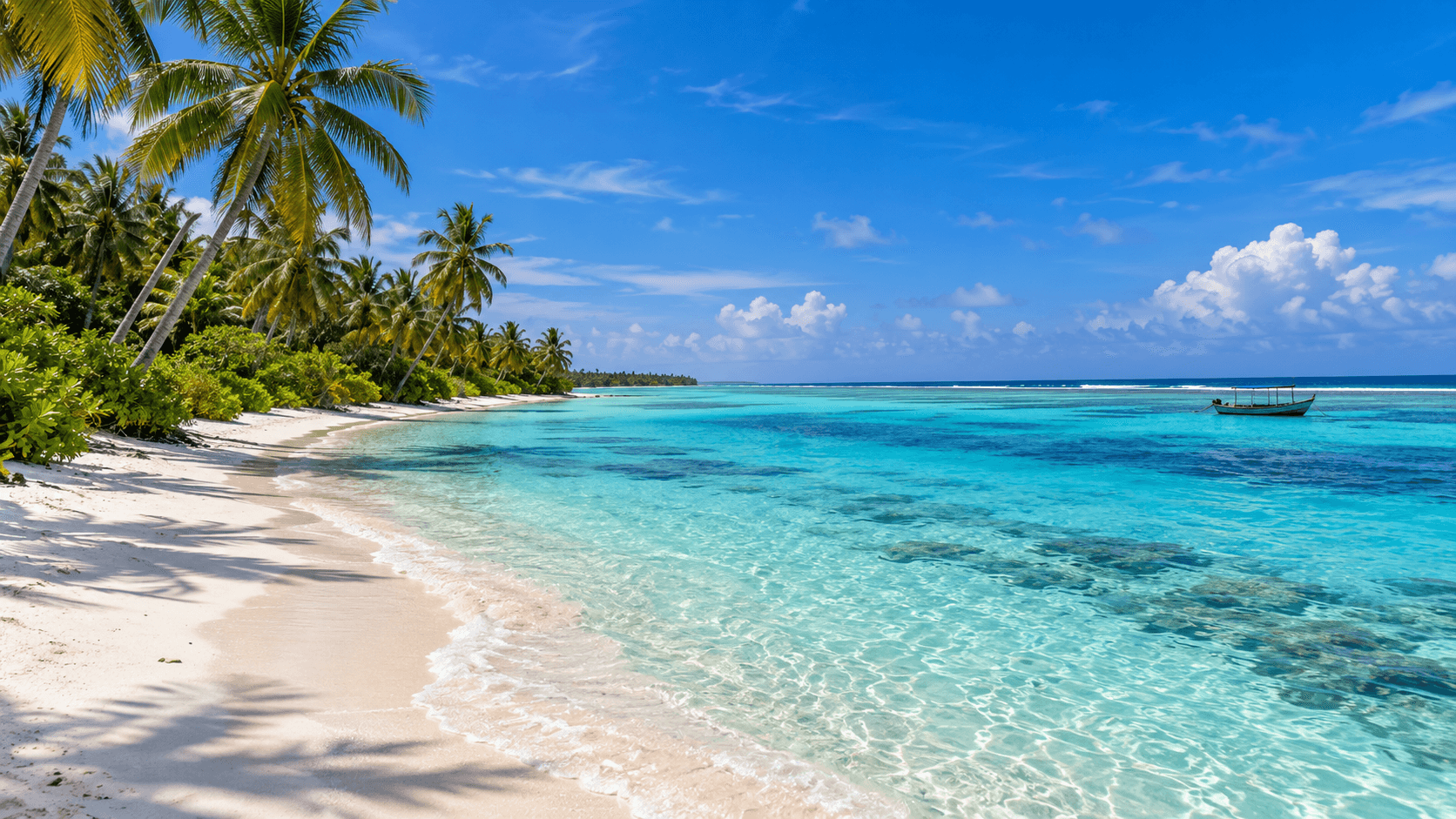
After a dense cultural itinerary through Delhi, Rajasthan or South India, an Indian Ocean island stay replaces complex overland routing with a deliberately narrow focus on beaches, marine environments and resort-based travel.