Less a single destination and more a collection of fiercely distinct neighborhoods, Baltimore rewards travelers who plan with intention rather than improvisation. This is a city where what works in Inner Harbor does not work in Hampden, and what feels right in Fells Point can feel completely wrong in Mount Vernon. Baltimore’s history is industrial, maritime, and deeply local, shaped by immigration, port trade, and a stubborn pride that resists polish. First-time visitors often underestimate how fragmented the city feels block to block, which is both its biggest challenge and its greatest strength. When you choose neighborhoods deliberately, Baltimore becomes layered, walkable in pockets, and surprisingly intimate. Food culture, especially seafood and immigrant-driven neighborhoods, does most of the storytelling. This guide focuses on helping you move correctly through the city, not just listing highlights.
Baltimore Neighborhoods
Canton | Federal Hill | Fells Point | Hampden | Harbor East | Inner Harbor | Little Italy | Mount Vernon | Patterson Park | Roland Park | Station North | Towson
Travel Essentials
Practical information for planning a trip to Baltimore, from airport and rail connections to city transportation, visitor considerations, emergencies and seasonal weather.
Baltimore Quick Facts
Essential details worth knowing before visiting Baltimore.
Baltimore is a Chesapeake Bay port city centered around distinctive neighborhoods, historic districts and a redeveloped waterfront. The Inner Harbor, Fells Point, Federal Hill and Mount Vernon form key visitor areas, while rail links connect the city with Washington, D.C., Philadelphia and the wider Northeast.
Arrival Information
Important considerations for reaching Baltimore by air, rail or road.
International entry requirements are U.S. federal requirements. Passport and visa requirements depend on nationality, purpose of travel and length of stay. Confirm current requirements before departure.
International Visitors
Travelers arriving from abroad must meet current U.S. immigration and customs requirements. Entry eligibility varies by nationality and travel purpose.
Arriving at BWI
BWI Marshall Airport is Baltimore’s primary commercial airport, with rail, light rail, taxi, ride-hailing and shuttle connections available.
Arriving by Train
Baltimore Penn Station is served by Amtrak and MARC, providing convenient rail access from Washington, D.C. and other Northeast Corridor cities.
Arriving by Car
Major highways connect Baltimore with Washington, Philadelphia and surrounding Maryland. Downtown parking costs and restrictions vary by location.
Health Information
Practical health considerations while visiting Baltimore.
Healthcare
Baltimore has major hospitals, urgent-care centers and pharmacies throughout the metropolitan area, with extensive medical services available in the city.
Medical Costs
Healthcare in the United States can be expensive. International visitors should understand their travel or medical-insurance coverage before departure.
Summer Heat
Summers can be hot and humid. Carry water and use sun protection when walking around the harbor, parks and outdoor attractions.
Winter Conditions
Cold temperatures, snow and ice are possible in winter and may temporarily affect sidewalks, roads, flights and regional transportation.
Travel Advisory
Personal-safety, weather and transportation considerations for Baltimore visitors.
Government advisory systems differ by issuing country. International travelers should check their government’s current official advice for travel to the United States before departure.
Personal Safety
Plan routes in advance, remain aware of your surroundings and keep valuables out of sight, particularly when walking after dark or through unfamiliar areas.
Neighborhood Awareness
Conditions can vary considerably between neighborhoods. Check routes before walking between visitor districts rather than assuming adjoining areas have similar conditions.
Severe Weather
Thunderstorms, heavy rain and occasional tropical systems can disrupt outdoor plans and transportation, especially during warmer months.
Winter Disruptions
Snow or freezing conditions can occasionally disrupt flights, rail service and road travel. Monitor forecasts during winter trips.
Holidays & Busy Periods
Periods and major events that can affect crowds, transport and accommodation demand.
Visitor Information
Everyday details that can make exploring Baltimore easier.
Payments
Credit and debit cards are widely accepted. Carrying some U.S. cash remains useful for small purchases, tips and occasional cash-only businesses.
Tipping
Tipping is customary at table-service restaurants, bars, taxis and many personal-service businesses. Check whether a service charge is already included.
Visitor Information
Official visitor information, maps and trip-planning resources are available through Visit Baltimore and visitor services in the Inner Harbor area.
Sales Tax
Posted retail prices generally exclude applicable sales tax, which is added at checkout where required.
Airports Serving Baltimore
BWI is the city’s primary airport, while Washington-area airports can provide additional flight options.
Baltimore/Washington International Thurgood Marshall Airport
Primary airport for Baltimore with Light Rail, MARC, Amtrak, taxi and ride-hailing connections.
Ronald Reagan Washington National Airport
Washington-area alternative requiring onward travel north to Baltimore.
Washington Dulles International Airport
Major international gateway west of Washington, D.C., but considerably farther from Baltimore than BWI.
Transport in Baltimore
Ways to travel between the waterfront, neighborhoods, airport and surrounding region.
Local Bus
Maryland Transit Administration bus routes serve Baltimore City and connect many neighborhoods and transit hubs.
Light RailLink
Light Rail serves downtown Baltimore and provides a direct public-transit connection to BWI Marshall Airport.
Metro SubwayLink
Baltimore’s subway provides east-west service through selected parts of the city and surrounding area.
Charm City Circulator
Free bus routes provide useful connections through downtown Baltimore and nearby visitor districts.
MARC & Amtrak
Penn Station connects Baltimore with Washington, D.C., BWI and other destinations along the Northeast Corridor.
Taxi & Ride-Hailing
Taxis and app-based ride services are useful for airport transfers and trips beyond convenient transit routes.
Connectivity & Electricity
Internet access, mobile service and device compatibility in Baltimore.
Wi-Fi
Wi-Fi is commonly available at hotels, cafés, transportation hubs and many attractions and public facilities.
SIM & eSIM
U.S. prepaid SIM, eSIM and international roaming options are widely available. Check device compatibility before travel.
Electricity
Baltimore uses the U.S. electrical standard of approximately 120V with Type A and Type B outlets.
Frequency
Electricity operates at 60Hz. Travelers using devices designed for other standards should check voltage compatibility.
Laws & Etiquette
Important legal considerations and everyday practices for Baltimore visitors.
Alcohol — Legal Requirement
The minimum legal age to purchase alcoholic beverages is 21. Venues may request government-issued photo identification.
Driving — Legal Requirement
Vehicles travel on the right. Follow Maryland traffic laws, posted speed limits, parking restrictions and pedestrian crossings.
Parking — Legal Requirement
Read curb signs and meter instructions carefully. Parking rules and restrictions can vary by block and time of day.
Private Property
Respect posted restrictions, private buildings, residential property and areas closed to public access.
Tipping — Social Custom
Tipping is customary for many restaurant, bar, taxi and personal services. Check the bill before adding gratuity.
Urban Courtesy — Etiquette
Keep sidewalks and transit entrances clear, queue normally and be considerate of residents when visiting residential neighborhoods.
Emergency Information
Essential emergency assistance worth keeping accessible during your visit.
Visitor Assistance
Keep your accommodation details and official Baltimore visitor information accessible when navigating unfamiliar parts of the city.
Lost Passport
International visitors should report a lost passport when appropriate and contact their embassy or consulate for replacement-document guidance.
Baltimore Weather by Season
Baltimore has four distinct seasons with hot, humid summers and generally cold winters.
Spring
March – MayTemperatures gradually warm, with variable conditions, regular rainfall and comfortable periods for walking and outdoor sightseeing.
Summer
June – AugustOften hot and humid with thunderstorms possible. Sun protection and hydration are useful for waterfront sightseeing.
Fall
September – NovemberTemperatures generally become milder, with cooler evenings and changing foliage later in the season.
Winter
December – FebruaryCold weather is typical, with occasional snow, freezing rain and icy conditions that can disrupt local and regional travel.
Baltimore’s geographic orientation
Inner Harbor core
Inner Harbor is Baltimore’s visual anchor, built around a compact waterfront basin with museums, hotels, and pedestrian promenades. It’s easy to navigate and heavily signposted, making it a natural starting point even if you don’t linger long. Think of it as orientation, not immersion.
North–south divide
Baltimore stretches north into denser, more residential neighborhoods and south toward water-facing districts. Transit connections weaken the farther you go, so daily plans should cluster geographically. Crossing the city multiple times in one day is inefficient.
East–west contrasts
East Baltimore leans historic and working-class, while West Baltimore has fewer visitor-facing attractions but deeper local texture. Visitors rarely need to cross far west unless visiting specific cultural sites. East–west travel takes longer than maps suggest. Visit Baltimore
Waterfront geography
Much of Baltimore’s appeal hugs water, from the harbor to the Patapsco River. Waterfront paths connect some neighborhoods but not all, creating walkable pockets rather than a continuous loop. Expect breaks where driving or rideshares are necessary.
Baltimore’s traveler fit
Urban culture travelers
Baltimore suits travelers who enjoy cities with visible history and rough edges. It’s not curated or smoothed over, which makes cultural exploration more honest. Expect contrast rather than cohesion.
Food-motivated visitors
If food is your main driver, Baltimore punches above its weight. Seafood, immigrant kitchens, and neighborhood bars deliver value and character. Culinary rewards come from leaving the tourist core.
Short-stay city breakers
Baltimore works well for 2–4 days when paired with nearby cities. Its size allows depth without overload, especially if neighborhoods are chosen carefully. Overstaying without a plan can feel repetitive.
Not for checklist tourism
This is not a city for ticking off landmarks rapidly. Visitors who expect constant blockbuster sights may feel underwhelmed. Baltimore rewards slower, neighborhood-based exploration.
Baltimore’s basics for first-timers
Safety reality
Safety varies sharply by neighborhood, often street by street. Staying in visitor-friendly areas and using rideshares at night minimizes risk. Awareness matters more here than in more uniform cities.
Local rhythm
Baltimore runs on neighborhood loyalty and routine. Many places close early or keep irregular hours, especially outside downtown. Always check hours before traveling across town.
Tipping and pricing
Prices are moderate by East Coast standards, but tipping norms are standard US expectations. Budget restaurants and bars still expect full-service tips. Cash is useful but not essential.
Weather impact
Humidity and heat shape summer travel, while winters are cold but manageable. Spring and fall offer the best balance of walkability and comfort. Seasonal planning matters more than expected.
Baltimore’s neighborhoods and districts
Inner Harbor
Inner Harbor is the city’s most visitor-oriented zone, centered on museums, hotels, and waterfront paths. It’s clean, navigable, and efficient but lacks local depth. Use it as a base or launchpad, not your entire stay.
Fells Point
Fells Point is historic, maritime, and nightlife-driven, with cobblestone streets and preserved 18th-century buildings. Bars, music venues, and waterfront dining define the atmosphere. It’s lively at night and characterful during the day.
Mount Vernon
Mount Vernon is Baltimore’s cultural heart, defined by historic architecture and arts institutions. It feels intellectual and residential, with walkable streets and independent cafes. This area rewards daytime exploration.
Hampden
Hampden is quirky, local, and unapologetically specific. Vintage shops, indie restaurants, and neighborhood pride dominate. It feels disconnected geographically but culturally essential.
Baltimore’s major attractions
National Aquarium
The National Aquarium is Baltimore’s flagship attraction and one of the best aquariums in the US. Exhibits are immersive and well-curated, appealing to all ages. Expect crowds during weekends and holidays.
Fort McHenry
Fort McHenry is where the US national anthem was inspired. The site combines military history with waterfront views. Allocate time to walk the perimeter paths.
American Visionary Art Museum
The American Visionary Art Museum focuses on self-taught and outsider artists. Exhibits are unconventional and deeply human. It’s one of Baltimore’s most distinctive museums.
Walters Art Museum
The Walters Art Museum offers an encyclopedic collection in a historic setting. Entry is free, making it high-value. It pairs well with Mount Vernon walks.
Baltimore’s cultural and historic highlights
African American heritage
Baltimore has deep African American cultural roots visible in music, literature, and civil rights history. Neighborhoods and institutions reflect this legacy beyond museum walls. Cultural context improves understanding of the city.
Literary legacy
Edgar Allan Poe’s life and death are tied closely to Baltimore. His legacy appears across the city, from gravesites to museums. Literature fans will find meaningful stops here.
Industrial past
Shipbuilding, steel, and port labor shaped Baltimore’s economy and neighborhoods. This industrial legacy explains the city’s layout and social divisions. Understanding this adds depth to exploration.
Sports identity
Sports loyalty runs deep, especially for baseball. Camden Yards is woven into civic pride rather than spectacle. Game days shift neighborhood energy noticeably.
Baltimore’s top places to visit
Iconic landmarks
Inner Harbor’s waterfront, Fort McHenry, and Camden Yards define Baltimore’s public image. These sites are visually striking and historically grounded. They’re essential, but not sufficient alone.
Neighborhood gems
Fells Point streets, Hampden’s Avenue, and Mount Vernon squares reveal daily Baltimore life. These areas feel lived-in rather than staged. Time spent here feels earned.
Underrated stops
The American Visionary Art Museum and neighborhood markets surprise many visitors. They offer creativity without crowds. These stops often become trip highlights.
Short-visit picks
Port Discovery Children’s Museum is a compact, hands-on museum designed for short, high-engagement visits, especially for families traveling with younger children. Exhibits focus on play-based learning and can be comfortably explored in one to two hours without disrupting a broader city itinerary.
Baltimore’s food and local experiences
City foods to try
- Maryland crab cakes in Fells Point
- Crab soup in Canton
- Pit beef sandwiches near Lexington Market
- Berger cookies from local bakeries
- Lake trout at neighborhood carryouts
- Smith Island cake at Inner Harbor cafes
- Oysters along the waterfront
- Old Bay-seasoned everything across the city
Markets and street culture
Lexington Market anchors historic food culture with evolving vendors and local flavors. Smaller neighborhood markets reflect immigrant communities. These spaces show Baltimore beyond restaurants.
Experience-based eating
Crab feasts, oyster shucking, and neighborhood bar crawls are social rituals. Food here is communal and opinionated. Participate rather than observe.
Baltimore’s transportation reality
Walking zones
Baltimore is walkable in clusters, not as a whole. Neighborhood exploration works best on foot once you arrive. Plan transit between zones, not within them.
Public transit
Light rail and buses exist but are inconsistent for visitors. They work for specific corridors only. Most travelers rely on rideshares for efficiency. Maryland Transit Administration
Driving considerations
Parking is manageable compared to larger cities but varies by neighborhood. Garages dominate downtown, while street parking rules change block to block. Always read signage carefully.
Rideshare use
Rideshares are common and often the easiest option, especially at night. Costs are reasonable for short distances. This is often the safest choice for visitors.
Baltimore’s lodging strategy
Inner Harbor hotels
Inner Harbor offers the highest concentration of hotels. Convenience is the main benefit, not character. This suits first-time visitors prioritizing logistics.
Boutique districts
Mount Vernon and Fells Point offer smaller hotels and guesthouses. These areas provide more atmosphere and local flavor. Availability is limited, so booking early matters.
Budget considerations
Budget hotels cluster near highways rather than neighborhoods. Location trade-offs can increase transit costs. Cheap rooms often cost time.
Stay duration logic
Stays of 2–3 nights fit central locations best. Longer stays benefit from neighborhood immersion. Match lodging to trip length.
Baltimore’s budget tracker
Budget traveler
Expect lower daily costs if you eat locally and limit attractions. Neighborhood dining keeps food affordable. Transit savings require planning.
Mid-range traveler
Mid-range travelers benefit most from Baltimore’s value. Comfortable hotels and strong dining are accessible. Museums and attractions remain affordable.
Luxury traveler
Luxury options exist but are limited in number. Waterfront hotels and high-end dining provide comfort, not excess. Baltimore luxury is understated.
How to reduce costs
Free museums, walkable neighborhoods, and local eateries reduce spend. Avoid moving across the city repeatedly. Concentrated days save money.
Sample price anchors:
- Simple meal: $12–18
- Sit-down meal: $25–40
- Transit fare: $2–4
- Hotel night: $140–220
- Local transport: $10–20 rideshare
- Attraction ticket: $25–50
Baltimore’s best areas to choose
First-time base
Inner Harbor offers simplicity and access. It’s predictable but efficient. Ideal for short stays.
Character seekers
Fells Point delivers atmosphere and nightlife. It feels historic and social. Noise can be a factor.
Cultural focus
Mount Vernon suits museum lovers and walkers. It’s elegant and calm. Evenings are quieter.
Quirky local feel
Hampden rewards curiosity but requires transit planning. It’s less convenient but more distinctive. Best for repeat visitors.
Baltimore’s Realistic Itineraries
Day 1: Harbor Orientation and Scale
Begin at the Inner Harbor to anchor your sense of the city’s geography. Visit the National Aquarium or Historic Ships, then walk the waterfront past the USS Constellation and Harborplace. The decision is whether to stay active or relax—either way, stay close to the harbor. Use this day to adjust to Baltimore’s scale and density before venturing deeper. Don’t stack major museums yet—this is your visual and spatial introduction.
Day 2: Cultural Depth in Mount Vernon
Mount Vernon delivers architecture, museums, and calm. Spend your morning at The Walters Art Museum or the Peabody Library, then walk the surrounding neighborhood’s leafy blocks. The trade-off is time versus depth—you won’t cover much ground, but you’ll gain texture. Eat lunch at a local café and treat this day as your cultural grounding. Don’t rush; Mount Vernon teaches pacing.
Day 3: Historic Energy in Fells Point
Fells Point is Baltimore’s most walkable historic district, full of cobblestone streets, colonial buildings, and waterfront bars. Spend the day exploring local shops and the Frederick Douglass–Isaac Myers Maritime Park. The decision is whether to stay through nightfall—this area transforms into a nightlife hub. Start slow and let the tempo rise naturally. This is your best day for people-watching and casual immersion.
Day 4: Fort McHenry and Open Space
Take a half-day at Fort McHenry National Monument for war history, harbor views, and open-air pacing. It’s south of the harbor and offers green space for slower movement. The decision is whether to go deeper into war history or treat it as a scenic interlude. Pair it with nearby Locust Point or a harbor ferry ride. This is your historical reset day.
Day 5: Local Contrast in Hampden
Head north to Hampden for a different flavor of Baltimore—independent shops, murals, and working-class history turned creative. Walk 36th Street (“The Avenue”) and explore vintage stores or local bookstores. The trade-off is charm versus convenience—this area requires intention to reach. Use the Light Rail or a rideshare and build in time for a slow lunch. This day pairs well with last-minute gift shopping.
Day 6: Museum Focus and Flex
Return to the cultural corridor for deeper dives. Choose between the Reginald F. Lewis Museum, the BMA, or the AVAM for contrasting experiences. The decision is whether to focus deeply on one museum or split your day. Keep transit light and use this day as your cultural buffer. This is ideal mid-trip to rebalance pace.
Day 7: Druid Hill Park and West Baltimore
Explore the green expanse of Druid Hill Park, home to the Maryland Zoo and panoramic walking trails. It’s your clearest contrast to Baltimore’s dense neighborhoods. The decision is whether to pair it with the adjacent neighborhoods or treat it as a standalone reset. Bring water and plan for open time. This is your recovery day in nature.
Day 8: Day Trip or Outskirts
Use this day to pivot: Annapolis, Ellicott City, or a half-day in nearby neighborhoods like Lauraville or Station North. The decision is whether to leave the city or deepen your understanding of its edges. Keep expectations low and movement simple. This is your expansion window—don’t stack too much. One anchor is enough.
Day 9: Markets, Makers, and Return
Spend your day at Lexington Market or in the creative hubs of Highlandtown or Remington. It’s your last chance to browse local makers, food stalls, and niche galleries. The decision is whether to go deep into food or crafts—do one well. Pair with walking and open-ended detours. This is your soft return toward departure.
Day 10: Quiet Closure and Departure
Stay near your accommodation or return to a favorite harbor spot. Use cafés, parks, or quiet museums as recovery space. The decision is whether to schedule anything structured—most travelers benefit from space. Pack, eat slowly, and leave room for one final walk. The goal is to close the trip without rush.
Baltimore’s Seasonal Expectations
Spring
Spring in Baltimore offers mild temperatures, early bloom, and the return of street festivals across neighborhoods like Mount Vernon and Fells Point. Walking becomes enjoyable again as sidewalks fill with locals and outdoor dining reopens. The decision is whether to plan around weekend events or leave days flexible. Rain is common but usually light—carry layers and a compact umbrella. This is the city’s social reawakening window.
Summer
Baltimore’s summer is hot and humid, especially along the Inner Harbor and waterfront zones. Outdoor attractions like Fort McHenry, Druid Hill Park, and Orioles games remain active, but midday movement slows under the heat. The decision is whether to load your schedule or slow down and favor late-afternoon plans. Transit becomes more draining, so limit zone-switching during peak heat. Evenings stay lively—this is when the city shines.
Fall
Fall is Baltimore’s best season for weather, visibility, and cultural programming. Neighborhoods like Hampden and Station North hold events, art crawls, and food festivals. The trade-off is higher hotel prices and more visitors during peak weekends. Book accommodations and key experiences early. This is the ideal window for walking-intensive days and architecture-focused itineraries.
Winter
Winter brings cold but rarely extreme conditions—snow is infrequent and short-lived. Indoor attractions like the BMA, AVAM, and Walters Art Museum take center stage. The decision is whether to embrace cold walks or stay close to indoor anchors. Crowds thin significantly, making it easier to explore heritage districts without pressure. This is your clearest window for crowd-free, museum-heavy trips.
Baltimore’s common mistakes
Over-reliance on Inner Harbor
Staying only in Inner Harbor misses the city’s personality. It’s a base, not the destination. Venture out deliberately.
Poor neighborhood planning
Jumping randomly between neighborhoods wastes time. Group activities geographically. Baltimore punishes inefficiency.
Ignoring local advice
Locals know which streets to avoid and where to eat. Ignoring this leads to disappointment. Ask and listen.
Expecting uniformity
Baltimore is inconsistent by nature. Expect contrast and adapt plans. Flexibility improves experience.
Baltimore’s packing and preparation
Footwear
Comfortable walking shoes are essential for cobblestones and uneven sidewalks. Style comes second to practicality. Blisters ruin days.
Weather layers
Layering handles humidity swings and waterfront breezes. Weather changes quickly. Always check forecasts.
Night planning
Plan evenings in advance to minimize late transit confusion. Know how you’ll get back. Safety improves with foresight.
Reservations
Popular restaurants and museums fill quickly on weekends. Advance booking saves time. Spontaneity has limits here.
Baltimore’s nearby extensions
Washington, DC
DC is a short train ride away and complements Baltimore culturally. Museums and monuments expand the trip’s scope. Combining both cities works well.
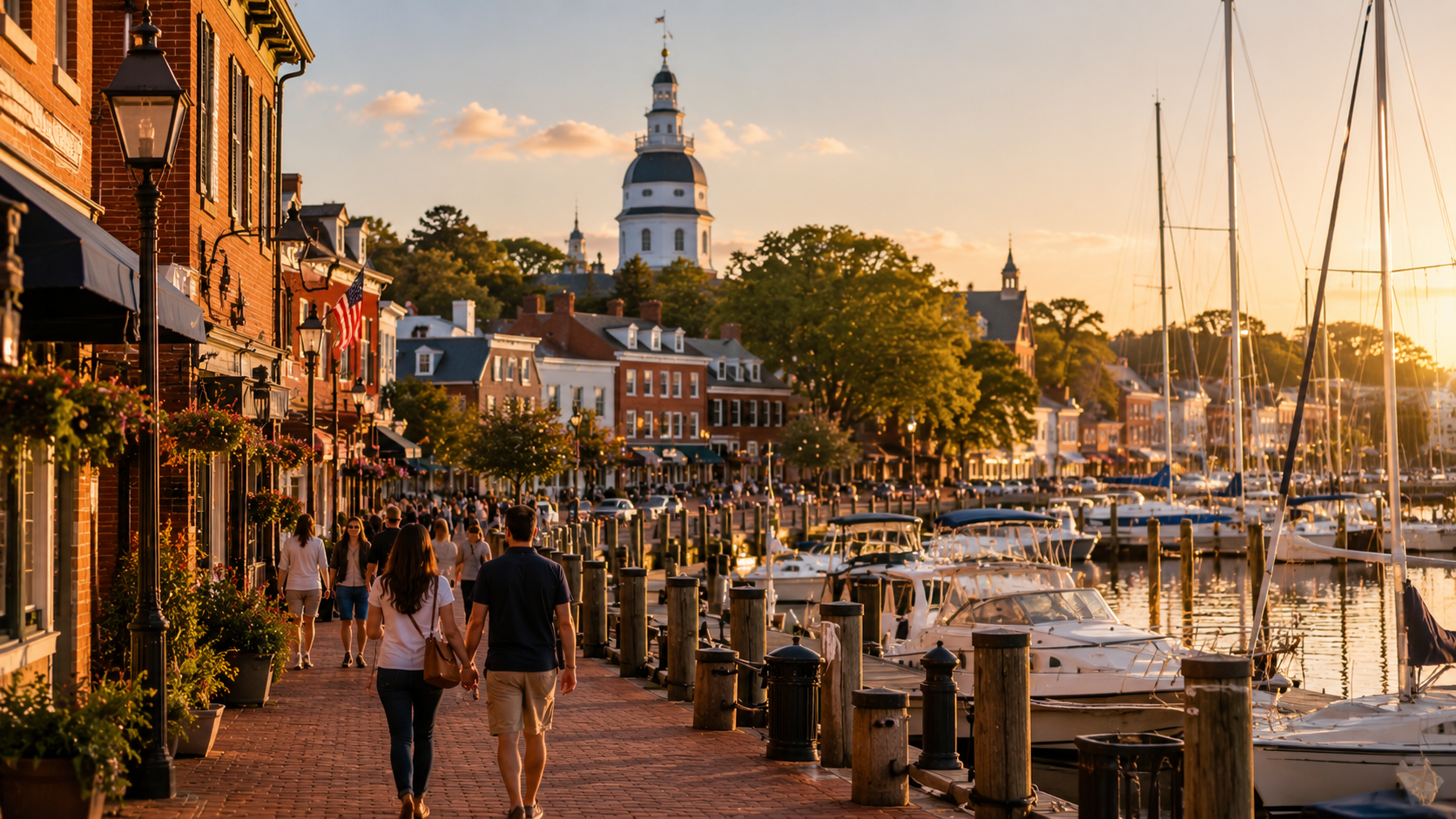
Annapolis
Annapolis offers maritime charm and colonial history. It’s quieter and walkable. Ideal for a relaxed day trip.
Philadelphia
Philadelphia adds big-city energy and history. It’s feasible by train. This pairing deepens East Coast context.
Chesapeake Bay towns
Chesapeake is a smaller Bay towns deliver seafood and scenery. They contrast Baltimore’s urban feel. Best accessed by car.