India is one of those destinations where tours can be extremely valuable in one part of a trip and completely unnecessary in another. A knowledgeable guide can transform visits to Mughal monuments, historic cities, archaeological sites, wildlife reserves, religious centers, and complicated regional routes, while independent exploration often works better for markets, beaches, modern neighborhoods, and slower city days. The country’s scale is the central planning challenge: Delhi, Agra, Rajasthan, Varanasi, Kerala, the Himalayas, and India’s major wildlife regions involve very different transportation, climate, access, and guiding decisions. India’s official tourism portal reflects that diversity, covering heritage, wildlife, spiritual travel, adventure, gastronomy, and destinations across every major region; travelers can use Incredible India for official destination planning information. A tour is therefore most useful when it solves a specific problem—interpretation, transportation, navigation, regulated access, safety, or difficult sequencing—rather than simply replacing something you could easily do yourself. The best India itinerary usually combines carefully chosen guided experiences with substantial independent time, beginning with understanding where tours genuinely earn their place.
Understanding How India Tours Work
India is too large and varied for one touring strategy to work everywhere. A walking guide in Old Delhi solves a completely different problem from a driver-guide circuit through Rajasthan, a wildlife safari in Ranthambore, or a backwater excursion in Kerala.
Discover India
Explore our travel guide including places to visit, things to do & essential travel tips.
Explore Travel Guide →Tours are most valuable when they remove friction
Delhi, Agra and Jaipur form one of India’s easiest multi-city routes to understand geographically, but transportation, monument visits and historical interpretation still require planning. A guided day at major monuments can reduce navigation and sequencing problems, while a private vehicle can make intercity touring more comfortable.
The same logic changes in Kerala, where the experience may revolve around waterways rather than monuments, or Uttarakhand, where terrain and outdoor conditions become more important than urban navigation.
India does not require an all-tour itinerary
Independent travel works particularly well when you want flexible time in neighborhoods, markets, cafés, beaches or easily navigated central districts. Mumbai, Goa and parts of Kochi, for example, can reward travelers who leave space for unstructured exploration.
The stronger strategy is usually selective touring: pay for expertise or logistics where they matter and preserve independent time everywhere else.
Regional scale changes the decision
Trying to cover Delhi, Agra, Jaipur, Varanasi and Kerala in a few days creates a transportation problem that no city tour can solve. India tours should therefore be chosen only after the larger route is realistic.
A well-designed itinerary may contain several tours without becoming a continuous escorted vacation.
Who India Tours Work Best For
First-time visitors
First-time travelers often receive the greatest value from an orientation tour in a complicated historic district. Old Delhi is a good example: dense streets, major religious sites, bazaars and layers of history occupy a relatively compact area but can take time to understand independently.
A guide is less necessary once you understand your surroundings and want to explore at your own pace.
Travelers with limited time
A short Delhi–Agra–Jaipur trip can benefit from structured transportation and carefully sequenced visits. The advantage is not simply seeing more attractions; it is reducing wasted time between them.
This matters particularly when timed entries, long road transfers or early departures are involved.
Families and older travelers
Private tours can become more attractive when a group needs slower pacing, rest stops, flexible meal times or door-to-door transportation. Paying more for a private vehicle and guide may provide considerably more practical value to a family than to one highly independent traveler.
Travelers should still check walking distances, stairs and vehicle access rather than assuming “private” automatically means accessible.
Experienced independent travelers
Experienced travelers may need surprisingly few tours. Delhi’s major monuments, central Mumbai, much of Goa and many urban attractions can be visited independently with sufficient preparation.
For these travelers, specialized history walks, wildlife excursions, food experiences and technically demanding outdoor activities are usually stronger purchases than generic sightseeing packages.
What to Know Before Booking India Tours
Tour titles can hide major differences in what is actually included. A “Taj Mahal tour,” for example, might mean a guided visit in Agra, transportation from Delhi, a combined Agra sightseeing day, or transportation with attraction admission handled separately.
Check admission carefully
Confirm whether monument tickets are included or whether the guide merely assists you at the entrance. “Guided entry” and “admission included” are not interchangeable.
Security screening can also remain mandatory even when a product advertises expedited or organized entry.
Check the actual transportation
For a Delhi-to-Agra excursion, determine whether you are buying a private car, shared vehicle, rail-based trip or meeting a guide after reaching Agra.
Return arrangements matter just as much. A tour that finishes somewhere different from your hotel can create additional transportation work at the end of an already long day.
Verify the guide
India’s Ministry of Tourism maintains a destination and guide platform where travelers can review guide-related information through tourism. For history-heavy experiences, guide quality often matters more than how many attractions appear in the itinerary.
Ask what language the tour is conducted in and whether the person accompanying you is actually providing interpretation rather than primarily transportation.
Read cancellation and weather terms
This becomes particularly important for wildlife, boating, trekking and other outdoor experiences. Weather or operational conditions can alter the experience even when your flights and hotels operate normally.
Avoid treating a flexible cancellation policy as a substitute for understanding local seasonal conditions.
Where Guided Travel Adds the Most Value
Delhi’s historical layers
Delhi contains monuments and neighborhoods from different periods rather than one compact historical center. A good guide can connect places such as Humayun’s Tomb, the Qutb complex, the Red Fort area and Old Delhi to the political and architectural history that links them.
The strongest guided experience is therefore usually interpretive rather than simply transportation between photo stops.
Agra beyond the photograph
The Taj Mahal is easy to recognize but much richer when its architecture, Mughal context, gardens, inscriptions and relationship to Agra are explained properly. UNESCO describes the Taj Mahal as a 17th-century Mughal mausoleum complex occupying a large garden beside the Yamuna River; its official heritage background is available at UNESCO World Heritage Centre.
Independent entry is entirely reasonable for travelers who prefer quiet observation, photography and self-guided research. A guide becomes high-value when historical interpretation is the priority.
Jaipur’s forts and palaces
Jaipur works independently, but its monuments benefit from explanation because architecture, court life, defensive geography and political history overlap. Amber Palace sits outside Jaipur’s central urban core, making transportation another factor.
Rajasthan Tourism notes that Amber Palace is around 11 kilometers from Jaipur and can be reached by bus, auto-rickshaw or car; travelers planning that visit can consult rajasthan tourism.
Varanasi’s cultural context
Varanasi is a destination where interpretation can be more important than transportation. Ghats, religious practices, lanes, temples and the relationship between the city and the Ganges are easy to observe but much harder to understand responsibly without context.
A thoughtful walking guide can therefore be more valuable than a vehicle-based sightseeing tour.
Nature and Outdoor Tours Across India
India’s outdoor touring environment ranges from Himalayan trekking to tiger reserves and tropical waterways. Treating all of these as ordinary sightseeing is a planning mistake.
Tiger reserves
Wildlife safaris are fundamentally different from independent urban sightseeing. Entry systems, safari zones, vehicles, guides and conservation rules can determine how visits operate.
The National Tiger Conservation Authority maintains information on India’s tiger reserves, including Ranthambore, Corbett, Kanha, Bandipur, Periyar and other reserves, at NTCA.
Wildlife sightings are never guaranteed. Evaluate a safari by the quality of the protected-area experience and naturalist interpretation rather than promises of seeing a tiger.
Himalayan trekking
The Himalayas require a different level of judgment. Trail difficulty, altitude, weather, road access, seasonal conditions and remoteness can make professional support far more valuable than it would be on an ordinary city walk.
Uttarakhand Tourism identifies trekking routes ranging from the Pindari and Kafni Glacier region to Garhwal routes and the Valley of Flowers; its official trekking information is available through uttarakhand tourism.
Do not choose a Himalayan trek solely because a commercial description calls it beginner-friendly. Match the route to your fitness, altitude experience and current official conditions.
Kerala’s waterways
Kerala presents almost the opposite problem. The attraction is not difficult navigation on foot but access to an extensive landscape of lakes, canals, lagoons and waterways.
Kerala Tourism describes destinations including Alappuzha, Kumarakom, Ashtamudi and Kuttanad within its backwater network at kerala tourism.
A boat experience can therefore provide access that road-based sightseeing cannot reproduce. Longer is not automatically better: a smaller boat exploring narrower waterways may suit some travelers better than an overnight houseboat.
Culture and History With Guides
India’s heritage is one of the strongest arguments for selectively hiring excellent guides.
Mughal India
Delhi and Agra contain some of the clearest opportunities for interpretation. Architectural details become more meaningful when connected to Mughal politics, religion, engineering and court culture.
A rushed tour that treats each monument as a photograph can actually diminish that advantage. Guide knowledge matters more than attraction count.
Rajasthan
Jaipur, Jodhpur and Udaipur offer forts, palaces, historic urban districts and living cultural traditions. A guide can explain why defensive architecture, water systems, royal residences and urban planning differ from one city to another.
You do not need a guide for every palace. One strong historical tour early in a Rajasthan trip may provide enough context to make later independent visits more rewarding.
India’s archaeological depth
India’s UNESCO-listed heritage extends far beyond the Taj Mahal and Jaipur. The country’s World Heritage properties include Ajanta and Ellora, Hampi, Khajuraho, Sanchi, Mahabalipuram, Fatehpur Sikri, Nalanda, the Great Living Chola Temples and many other sites; UNESCO’s current India inventory is available at Unesco.org.
Sites with extensive archaeological remains are often where specialized guides deliver the strongest intellectual value.
When independent sightseeing is enough
Not every temple, museum, market or historic building needs interpretation. If official signage, audio material or your own research answers your questions, independent exploration may be cheaper and more satisfying.
Use guides where context changes what you understand, not merely where someone is available to accompany you.
India Tours Worth Considering
Old Delhi walking experiences
A focused Old Delhi walk can be one of the most useful introductions to India for first-time visitors. The strongest versions concentrate on a manageable area rather than trying to combine distant New Delhi monuments into the same walking experience.
Consider one if you value historical interpretation and help navigating crowded lanes. Explore independently later once the geography feels familiar.
Agra heritage tours
Agra tours work best when they combine serious interpretation with sensible sequencing. The Taj Mahal and Agra Fort can form the core of a heritage-focused visit, while Fatehpur Sikri becomes more logical when your wider route supports the additional travel.
Do not judge an Agra tour by the number of stops alone.
Jaipur fort and heritage tours
Jaipur’s dispersed attractions make guided vehicle-based touring more defensible than in a compact pedestrian city. Amber, central Jaipur and other historic sites can require substantial movement.
A private format is particularly useful for travelers who want to spend much longer at one palace or photograph architecture without being pushed through a fixed group schedule.
Varanasi walking and river experiences
A walking experience and a river experience solve different problems. Walking helps interpret lanes, religious spaces and neighborhood history; a boat provides a completely different geographical perspective on the ghats.
Travelers interested primarily in atmosphere may prefer exploring independently and booking only the river component.
Wildlife safaris
Ranthambore, Corbett, Kanha, Bandhavgarh and other wildlife destinations require more structured planning than ordinary sightseeing. Reserve rules and safari arrangements should be treated as the core product, not an afterthought added to a generic road trip.
Allow enough time that your entire wildlife experience does not depend on one short outing.
Kerala backwater experiences
Houseboats are only one way to experience Kerala’s waterways. Day cruises, smaller craft and village-oriented excursions can provide more direct interaction with narrower channels and local landscapes.
Choose based on the experience you actually want rather than assuming an overnight houseboat is mandatory.
Food and Local Experiences in India
India is particularly well suited to food exploration, but the value of a guide varies dramatically.
Old Delhi
Old Delhi’s dense commercial streets and long culinary history create a strong setting for a food walk. A knowledgeable guide can provide context, explain dishes and help visitors understand how individual foods connect to neighborhoods and communities.
The benefit should be interpretation and variety, not simply being led to several vendors.
Mumbai
Mumbai offers very different food environments, from established markets and street-food areas to regional restaurants. Travelers comfortable researching food can explore much of the city independently.
A specialized food tour is more defensible when it introduces regional cuisines or communities you would otherwise overlook.
Jaipur and Rajasthan
A culinary experience can complement Rajasthan’s palace-heavy sightseeing by shifting attention toward everyday food culture. This works particularly well after several monument-focused days.
Travelers primarily interested in tasting familiar dishes may get better value exploring independently.
Kerala
Kerala’s food culture changes noticeably between coastal communities and inland areas and reflects seafood, coconut, spices and regional traditions. Culinary interpretation can add value, but food touring should not replace time in ordinary restaurants, markets and local neighborhoods.
India’s strongest food itinerary usually mixes guided discovery with independent meals.
How Tour Logistics Work in India
Meeting points matter
A cheap tour can become inconvenient when its meeting point requires a long pre-dawn ride across Delhi, Mumbai or another large city. Always map the departure location before booking.
Hotel pickup is valuable only when your accommodation is actually inside the pickup area.
Road travel can consume the day
Distances that look manageable on a map can translate into substantial driving. This is especially important when combining Delhi, Agra and Jaipur or moving through Rajasthan.
A private vehicle buys convenience, but it does not eliminate distance.
Rail can replace road touring
India’s rail network can be extremely useful for moving between major destinations. Indian Railways provides passenger information and international-tourist guidance through indian rail.
This means you do not automatically need one driver for an entire multi-city itinerary. Rail plus locally hired guides can sometimes provide a better balance of independence and support.
Confirm where the tour ends
Some experiences return to the starting point; others finish near the final attraction. Day trips may include hotel return while city walks usually do not.
Knowing the endpoint prevents an unpleasant transportation surprise late in the day.
Choosing Where Tours Fit Your India Trip
Delhi
Central access can make early departures and historical sightseeing easier, but choosing a hotel solely because a tour offers pickup there is rarely sensible. Pick accommodation around your wider itinerary first.
Then compare tours based on realistic pickup arrangements.
Agra
Staying in Agra can make an early Taj Mahal visit easier than attempting every experience as a Delhi day trip. Travelers who want time for Agra Fort and a slower pace may gain more from an overnight stay.
Those with very limited time may prefer a structured day excursion.
Jaipur
Jaipur is a strong base for several days of sightseeing rather than a destination that needs a different hotel for each excursion. Amber is outside the central city, but that alone does not justify changing accommodation.
Use transportation to reach the fort rather than reorganizing the entire trip around it.
Rajasthan beyond Jaipur
Jodhpur, Udaipur and Jaisalmer should generally be treated as separate destinations rather than Jaipur excursions. A regional driver can simplify the route, but rail and air connections can also work depending on your itinerary.
This is where a country-level “India tour” can become less useful than a carefully designed regional trip.
India Tour Costs and Value
There is no meaningful single price category for an India tour because a walking guide, private car, safari, boat excursion and Himalayan trek provide completely different services.
What you are actually paying for
The main cost drivers include guide expertise, private transportation, distance, attraction admission, vehicle class, group size, specialized equipment, permits, meals and duration.
Private transportation becomes more defensible when it replaces multiple difficult transfers.
Cheap is not necessarily good value
A low-priced city tour that rushes through attractions you could easily visit independently may provide less value than paying more for an expert guide at one historically complex site.
Conversely, an expensive private guide adds little when you mainly want unstructured time in an easy-to-explore neighborhood.
Pay for the difficult component
If transportation is difficult, pay for transportation. If interpretation is the challenge, pay for an excellent guide. If access requires organized arrangements, pay for the access solution.
Do not automatically purchase a full package when only one component of the day is complicated.
Private vs Group vs Independent India Travel
Group tours
Group tours can reduce cost and simplify transportation, particularly for day trips and first-time orientation. They also provide structure for travelers who do not want to research every transfer.
Their weakness is pacing. Waiting for a large group can be particularly frustrating at monuments where you would otherwise want to linger.
Private tours
Private touring makes the strongest case in Rajasthan, family travel, specialized historical touring and complicated day trips. Flexible stops and personalized pacing can materially change the experience.
Private touring is poor value when the itinerary simply moves you between straightforward attractions without providing expertise or logistical benefits.
Independent travel
Independent travel provides the most freedom and can be excellent in India’s major cities once you understand the local geography. It is also important for avoiding the feeling that every day has become a scheduled excursion.
The tradeoff is research. Rail stations, local transportation, attraction procedures and long-distance routing require more preparation.
A hybrid trip usually wins
For many travelers, the strongest India itinerary might include an Old Delhi guide, an Agra heritage guide, independent time in Jaipur, a structured wildlife safari and a boat experience in Kerala.
That is very different from buying an escorted tour for every day of the vacation.
Building Tours Into an India Itinerary
Short Golden Triangle trip
For a compact Delhi–Agra–Jaipur itinerary, use guided experiences selectively. A historical orientation in Delhi can help on the first day, while Agra is a strong candidate for guided interpretation.
Leave some Jaipur time independent so the entire trip does not become a sequence of fixed departures.
One-week northern India trip
A week gives enough room to slow the Golden Triangle rather than simply adding more destinations. Consider one major guided experience in each city and preserve evenings or partial days for independent exploration.
Avoid forcing Varanasi into the itinerary unless transportation and available time genuinely support it.
Rajasthan-focused trip
With more time, Jaipur can lead into Jodhpur and Udaipur, with Jaisalmer added when the route length is justified. A regional driver can simplify movement, but you do not need a guide sitting with you every day.
Hire specialist local guides where interpretation is valuable.
Longer India trip
A multi-week trip can combine northern heritage with a completely different second region such as Kerala. Flying between distant regions may be more sensible than treating the entire country as one continuous road itinerary.
Build recovery days between demanding touring blocks.
Seasonal Considerations for India Tours
India should not be planned around a single nationwide “best season.” Climate varies substantially between the northern plains, Himalayas, western deserts, tropical south and monsoon-affected regions.
Northern heritage routes
Delhi, Agra and Rajasthan can become extremely hot during hotter parts of the year. Temperature changes the value of early starts, air-conditioned transportation and shorter walking periods.
A tour schedule that looks comfortable in cooler weather can feel completely different in intense heat.
Monsoon conditions
Rain affects regions differently and can alter walking, road travel, boating and outdoor sightseeing. Do not assume monsoon automatically means a destination is unusable, but do expect some activities to become less predictable.
Flexible scheduling becomes more valuable for outdoor experiences.
Himalayan timing
High-altitude destinations have their own access and weather considerations. Trekking seasons should be evaluated by specific route rather than by a general India calendar.
Current local guidance matters far more than generic monthly rankings.
Wildlife seasons
Reserve access and safari conditions vary by destination and season. Check the relevant reserve authority before committing flights or hotels around a wildlife experience.
Never assume every Indian tiger reserve follows identical opening periods or operational rules.
India Tour Booking Mistakes
Booking too many tours
India is already stimulating and logistically demanding. Filling every morning and afternoon with scheduled sightseeing can turn a fascinating trip into an endurance test.
Protect unscheduled time.
Choosing by attraction count
“Ten attractions in one day” is not automatically better than four. Delhi and Jaipur in particular reward deeper visits.
Evaluate how much time is allocated to each major site.
Ignoring transportation
A tour may advertise eight hours without making clear how much of that time is spent driving. This matters greatly for day trips from major cities.
Compare sightseeing time with transit time.
Assuming all guides are equally knowledgeable
A charismatic escort and a deeply informed heritage guide are not necessarily the same thing. For archaeology, architecture, religion and complex history, expertise matters.
Choose accordingly.
Confusing convenience with necessity
Many Indian attractions are completely realistic to visit independently. A tour should solve a problem or deepen the experience.
If it does neither, keep your money and explore independently.
Overlapping experiences
Booking a Delhi city tour, Old Delhi tour and another broad heritage tour may repeatedly cover the same sites. The same problem can occur with Jaipur palace packages.
Compare actual itineraries before paying.
Preparing for Your India Tours
Monument days
Carry only what you reasonably need and check current entry restrictions for important monuments before leaving your hotel. Security procedures can affect how quickly groups enter.
Comfortable footwear matters on days combining large complexes, forts and old-city walking.
Wildlife excursions
Follow reserve instructions rather than treating a safari like ordinary road sightseeing. Bring clothing suitable for the local temperature and time of departure, which can differ substantially between early morning and later in the day.
Photography equipment should never interfere with reserve rules or wildlife behavior.
Himalayan activities
Preparation must match the actual altitude and route. Footwear, weather layers, water, physical conditioning and emergency planning become increasingly important as trips become more remote.
Do not use an ordinary city-tour packing list for a mountain trek.
Boat experiences
For Kerala and other water-based excursions, think about sun exposure, rain protection and how much luggage can reasonably accompany you.
Travelers susceptible to motion sickness should prepare before departure rather than waiting until they are already on the water.
Keep essential information available offline
Save accommodation details, meeting instructions and key transportation information somewhere accessible without relying entirely on mobile data.
For early departures, confirm the meeting point the previous evening rather than trying to solve it while the tour is leaving.
Where to Go Next
Nepal
Nepal is a logical continuation for travelers whose India trip creates a stronger interest in Himalayan landscapes, trekking, Buddhist and Hindu heritage, or mountain culture. It provides a more concentrated Himalayan experience than a broad India itinerary.
Sri Lanka
Sri Lanka works particularly well after southern India. It combines historic sites, wildlife, tea-growing highlands, beaches and rail travel within a considerably smaller geographic area.
Bhutan
Bhutan provides a sharply different travel structure centered on Himalayan landscapes, Buddhist culture, monasteries and carefully managed tourism. It makes sense for travelers who want cultural interpretation and mountain scenery to remain central to the trip.
Maldives
The Maldives creates perhaps the strongest contrast after a demanding India itinerary. Instead of cities, monuments and overland travel, the focus shifts toward islands, marine environments and resort-based relaxation.
Bangladesh
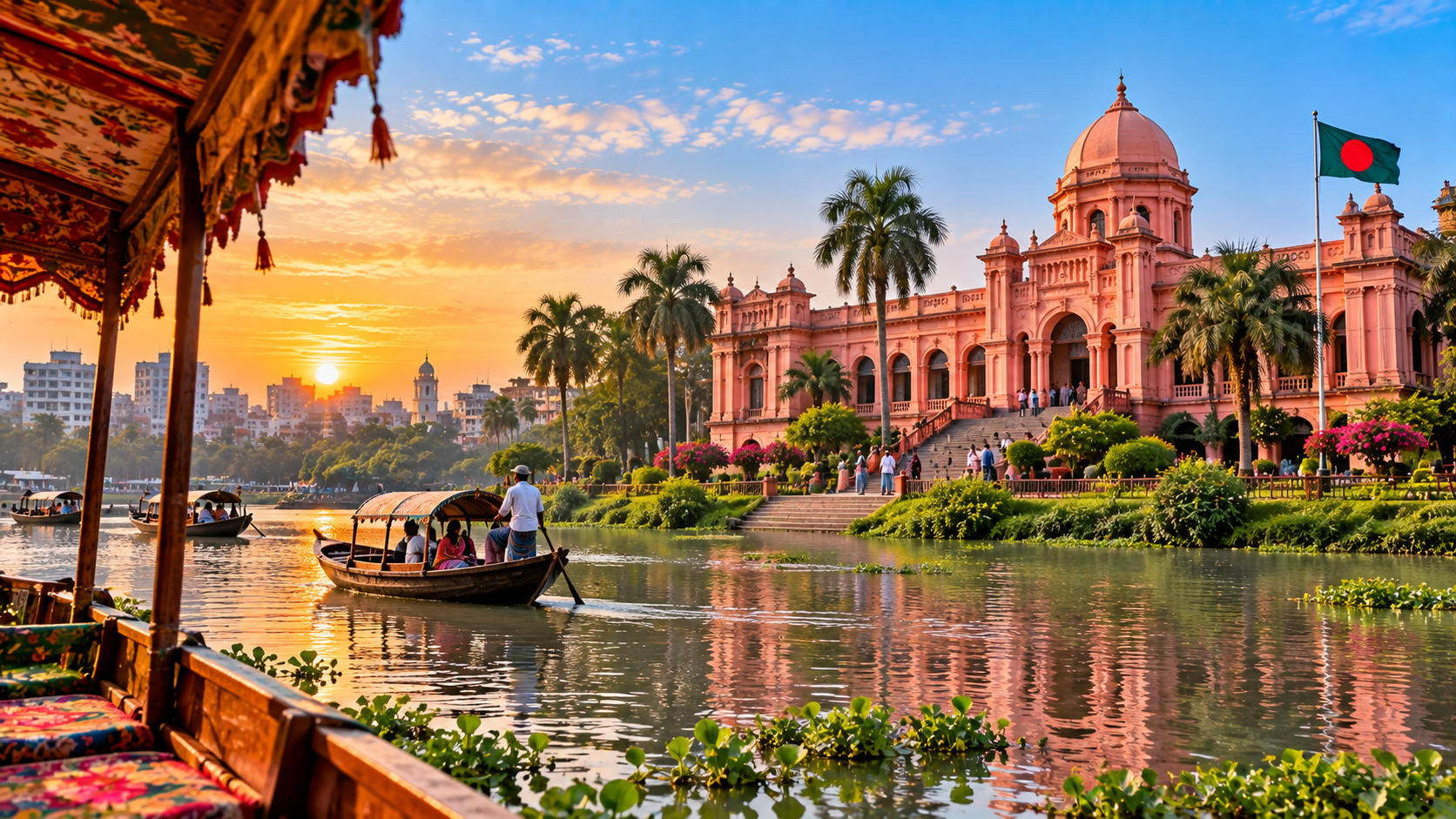
Bangladesh offers a less conventional continuation for travelers interested in Bengal’s broader cultural and historical geography. Dhaka and the country’s river landscapes provide a different perspective on South Asia while maintaining regional continuity.